
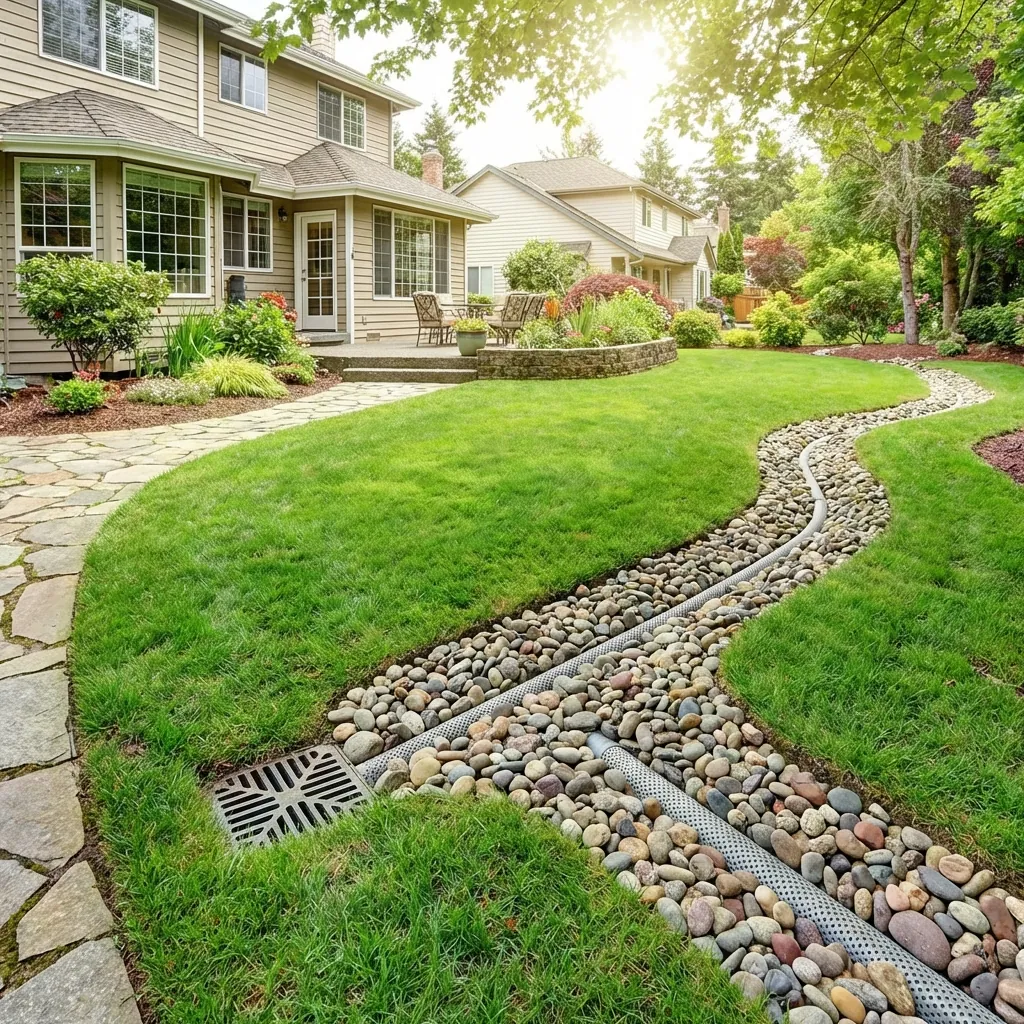
Downspout Drainage Extensions in Boise, Idaho
Downspout drainage extensions in Boise that route roof runoff safely away from foundation walls, crawl spaces, and basement zones.
Move Roof Water Away From Your Foundation
One of the fastest ways to reduce foundation water loading is correcting downspout discharge. If roof water exits beside your home, every storm saturates footing-adjacent soils. Extension and rerouting systems move that volume away before it can build hydrostatic pressure.
Why Downspout Management Matters
Roofs collect significant water volume even in short storm windows. Concentrating that flow at one or two points beside the home is a common root cause of seepage and soil movement.
- Localized saturation: Continuous wetting weakens support soils next to footings.
- Wall pressure increase: Saturated backfill raises basement wall loading.
- Erosion channels: Repeated splash and runoff carve pathways toward crawl space vents and slab edges.
Our Extension and Discharge Options
We use solutions matched to site grade and distance-to-outlet constraints.
- Underground tightline runs: Durable piping to a controlled daylight or emitter location.
- Pop-up emitter systems: Controlled release in safe yard zones away from structures.
- Integrated basin routing: Tie roof water into catch basins where flow concentration is high.
- Surface interception pairing: Combine with channel drains at pavement transitions.
Boise-Specific Design Considerations
In the Treasure Valley, seasonal freeze conditions and irrigation cycles can stress poorly routed downspouts. We plan for both:
- Freeze protection: Relief and routing details that reduce winter blockage risk.
- Irrigation season load: Keep roof and landscape water from compounding in the same area.
- Serviceability: Cleanout access points for periodic maintenance.
System Pairings That Improve Performance
Downspout work is often the first phase, not the only phase. If you already have interior seepage or yard ponding, we usually pair this service with:
- Basement waterproofing for below-grade moisture control.
- Yard and exterior drainage for broad site runoff.
- Stormwater management planning for full-property flow control.
Reference guidance: City of Boise drainage resources.
Free Roof Runoff Assessment
We will trace each downspout path, identify recirculation risk, and design a discharge route that protects your foundation.
Common Failure Signs in Boise
Water at Foundation Edge
Roof runoff dumping directly beside basement or crawl space walls.
Splash and Soil Erosion
Mulch washout, trenching, or splash-back against siding and concrete.
Recurring Seepage
Basement or crawl space moisture that spikes after storms.
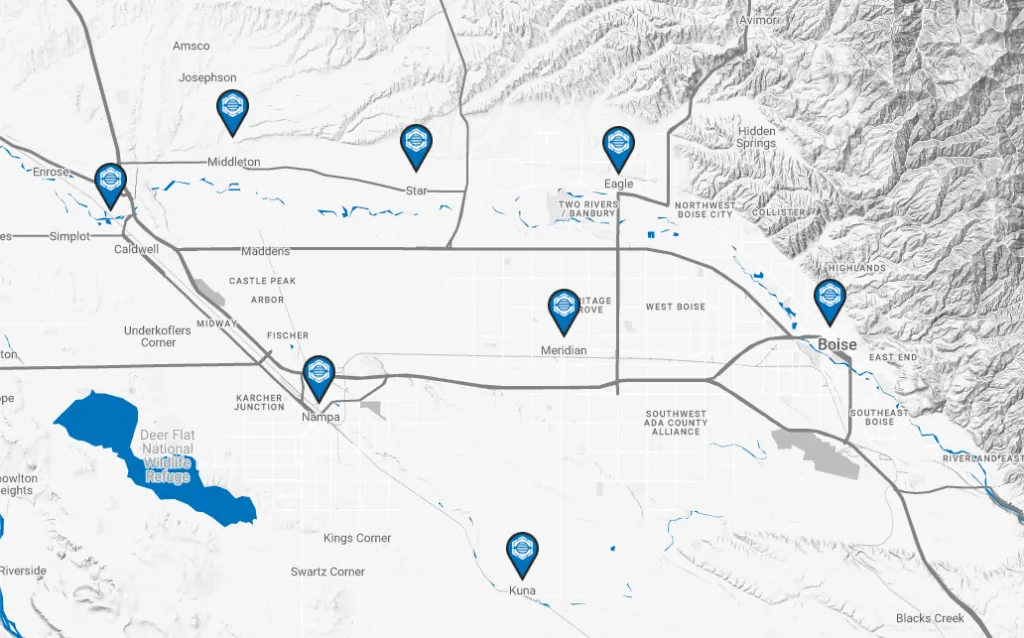
Serving All of Boise & The Valley
Our structural specialists are in Boise daily.
Boise Downspout Extensions FAQ
How far should downspouts discharge from the foundation?
Can I just add a flexible extension hose?
Will this alone stop all basement leaks?
What Boise Homeowners Say
"They rerouted our downspouts and drainage line. Water now exits far from the house and our crawl space humidity dropped quickly."
"The team explained exactly why our old setup failed. New discharge path works great, even in heavy rain."
"Fast, tidy install and clear communication. This was one of the best improvements we have made to protect the home."
Why Choose Idaho Drainage Solutions?
Licensed & Insured
Fully licensed in Idaho (RCE-57554) with comprehensive liability coverage for your protection.
Prompt Scheduling
We respect your time. Appointments scheduled within 24-48 hours for most estimates and inspections.
Satisfaction Guaranteed
We stand behind our work with industry-leading warranties and a commitment to getting it right.
Local Expertise
We know Treasure Valley soil, water tables, and building codes better than anyone.
No-Surprise Pricing
Clear, upfront quotes with no hidden fees. The price we quote is the price you pay.
Free Consultations
Every project starts with a free on-site evaluation. No pressure, just honest advice.

0% Interest Financing Available
Flexible payment options for your drainage projects.
Related Services in Boise
PROTECT YOUR HOME
Don't let a small issue turn into a structural failure. Schedule your free estimate now.