
Drainage Engineering Glossary for Boise Homeowners
Treasure Valley drainage engineering glossary covering core terms used in yard drainage, stormwater management, grading, and foundation moisture control.
Plain-English Definitions for Drainage and Stormwater Terms
Need a property-specific answer?
We can inspect the issue on-site, document what is actually happening, and tell you whether it needs drainage work, waterproofing, structural repair, or simple monitoring.
- Treasure Valley soil and moisture context
- Photo-documented findings and next steps
- No-pressure recommendations built for your property
Drainage projects become much easier to understand when the vocabulary is clear. Homeowners in Boise and across the Treasure Valley are often handed estimates that sound technical, but the decisions themselves are practical: where water starts, how it moves, how it is collected, and where it is safely discharged. This glossary translates the most important drainage terms into plain language and explains why they matter on real properties.
How to use this drainage glossary
The goal of a glossary is not to turn a homeowner into a civil engineer. The goal is to help you ask better questions when a yard floods, a basement leaks, or a contractor proposes a system that sounds more complete than it really is. If two bids both say "French drain," for example, but one includes slope verification, cleanouts, aggregate specification, and discharge routing while the other does not, those are not equivalent systems. Terminology helps you see the difference.
Drainage language matters even more in Boise because local conditions are mixed. One home may need simple grading correction. Another may need subsurface interception because water moves laterally through denser soils. Another may need active pumping because gravity discharge is limited. A homeowner who understands the words being used can usually tell whether the proposed solution actually matches the problem.
This glossary therefore focuses on the terms that matter most during inspections, estimates, and repair decisions. It is written for homeowners, property managers, and anyone trying to understand how water behavior affects structures and landscapes in the Treasure Valley.
Surface grading and collection terms
Positive grade means the surface slopes away from the structure so water naturally leaves the foundation zone instead of collecting there. Positive grade is one of the most important ideas in drainage because it determines whether the site is helping the structure stay dry or working against it. A yard can look almost level and still fail this standard if the first several feet near the home pitch back toward the wall.
Negative grade is the opposite. It means water is encouraged to move toward the structure or a low spot where it can cause saturation, seepage, or structural stress. Negative grade is common after settlement, patio additions, and landscape changes. Swales are shallow, shaped depressions that intentionally guide water across the site. They are not just ditches. A well-designed swale is part of the grading strategy and helps move surface flow to a safe collection or discharge point.
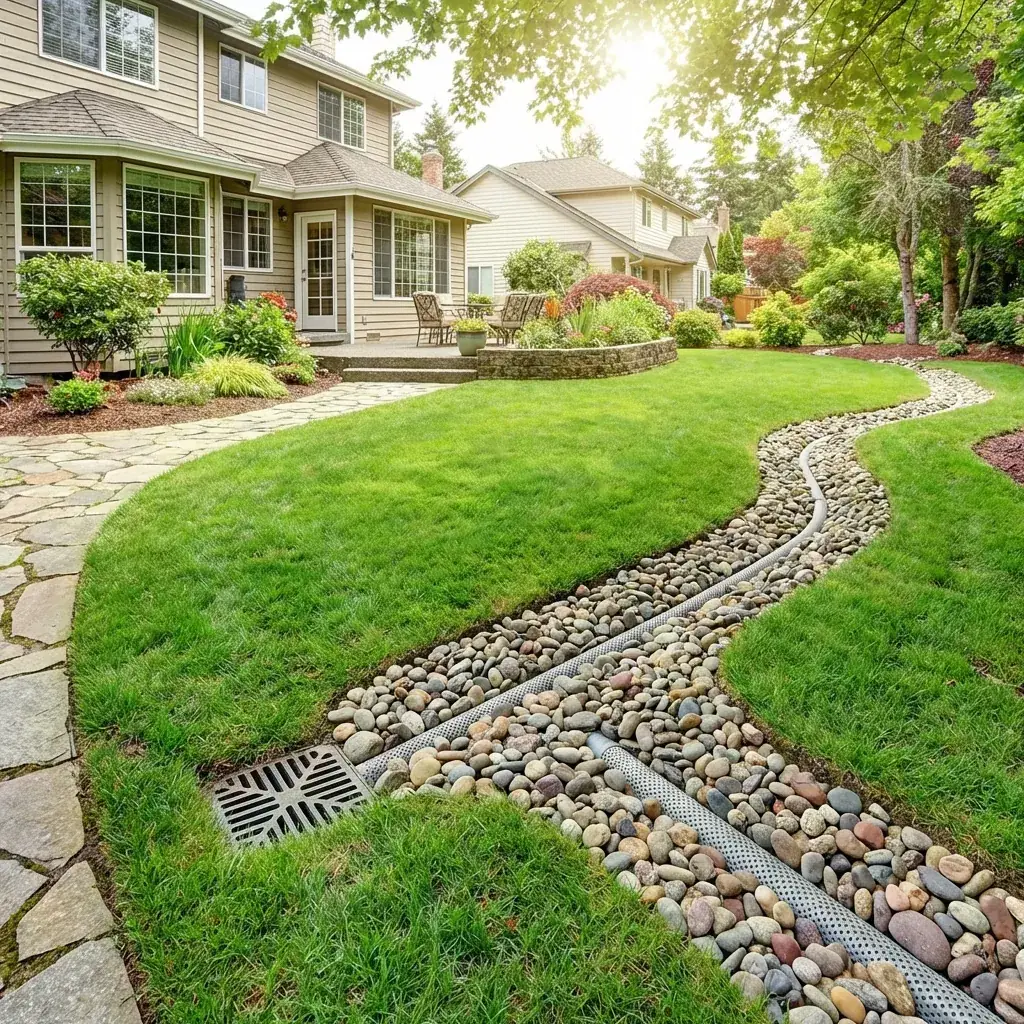
Catch basins and area drains are intake points that collect visible surface water. A catch basin usually includes a sump area where sediment can settle before water continues into pipe. An area drain is a broader term for a grate-based intake that captures water at a low point. Channel drains are long, linear drains placed along garage doors, patios, and hardscape transitions where water needs to be intercepted quickly before it crosses into unwanted areas.
These terms matter because many Boise flooding problems are surface-flow problems first. If the grade is wrong, or if the collection point is too small or located in the wrong place, the system cannot perform no matter how attractive the landscape looks when dry.
Conveyance and discharge terms
Conveyance is the route water takes after it is collected. That route may be a solid pipe, a perforated drain line, a swale, or another engineered path. The point is that collection alone is never enough. Water must continue moving reliably through the system without backing up, clogging, or being discharged into another vulnerable part of the lot.
Discharge point refers to where the water exits the system. This is one of the most overlooked concepts in residential drainage. Homeowners sometimes assume that if a basin or trench drain is installed, the problem is solved. In reality, a drain without a reliable discharge is incomplete. If the outlet is too high, too small, prone to freezing, prone to blockage, or routed into another soft zone, the system is simply relocating the failure.
Daylighting means a pipe outlet is brought to the surface at a lower point on the property or another approved receiving area, allowing water to exit by gravity. Outlet protection refers to the stone, splash control, erosion control, or other measures used where the water exits so it does not scour the soil. Cleanouts are access points that allow future maintenance of the line. When cleanouts are missing, even a well-designed system can become difficult to service after sediment or roots accumulate.
If you are comparing proposals for drainage solutions or yard drainage planning, ask whether the contractor is describing collection only or a full intake-to-discharge design. That vocabulary difference often reveals whether the scope is truly complete.
Soil and water behavior terms
Infiltration rate describes how quickly water enters the soil surface. If irrigation applies water faster than the soil can absorb it, runoff begins even in dry weather. Percolation refers to how water moves downward through the soil profile after it enters the ground. A yard can have acceptable surface infiltration and still develop drainage problems if deeper soil layers slow movement or redirect it sideways.
Capillary action is the upward movement of moisture through small pores in soil and building materials. It helps explain why a basement wall or crawl space can remain damp even when no obvious flooding is present. Hydrostatic pressure is the force exerted by water in saturated soil against a basement wall or floor. This is a key concept in leak diagnosis because many basement problems are pressure problems, not just surface dampness problems.
Expansive clay refers to soil that swells when wet and shrinks when dry. That volume change can contribute to cracking, settlement, and long-term moisture sensitivity around foundations. Erosion is the removal of soil by moving water, while scour usually describes more concentrated local erosion where discharge velocity is high. If you want deeper explanations of the building-science side of these ideas, pages like what is expansive clay and what is capillary action in soil expand on the way soil behavior affects structure performance.
Boise drainage work often succeeds or fails based on how well these soil terms are understood. A contractor who ignores them may install components that look correct but are not matched to actual site conditions.
Foundation moisture and basement terms
Drain tile usually refers to a subsurface drainage system designed to collect water at or near footing level and route it to a discharge location or sump. Despite the name, modern drain tile is typically pipe, not tile. Sump basin is the pit where collected water gathers before a pump discharges it. Sump pump is the mechanical component that moves that water when gravity alone is not enough.
Dampproofing and waterproofing are often confused. Dampproofing usually addresses minor moisture resistance, while waterproofing is intended for more robust moisture exclusion. Even then, neither is a substitute for proper drainage where hydrostatic pressure is present. Cove joint describes the seam where a basement wall meets the floor slab, one of the most common locations for seepage because pressure finds the joint between two building elements.
Vapor intrusion and bulk water intrusion are also different problems. Vapor is moisture moving through air or materials without visible flowing water. Bulk water is actual liquid entry. Homeowners who understand that difference are better equipped to decide whether they are dealing with humidity management, pressure-relief drainage, waterproofing, or some combination of all three.
This language becomes especially useful when comparing pages like basement waterproofing and foundation waterproofing vs drainage. The words describe different failure mechanisms and different solutions.
Terms that matter when reading a proposal
Many homeowners focus on the headline term in a bid, such as French drain, channel drain, regrade, or sump system. The more important questions often sit in the supporting language. Does the scope define slope? Does it specify washed aggregate, pipe type, geotextile, or cleanout access? Does it describe where the water is discharged? Does it mention flow testing or post-install verification? Those details determine whether the contractor is describing a real system or just a partial intervention.
Maintenance access means the system can be inspected and serviced without guesswork. Flow test refers to verifying that the installed system actually carries water as intended. Capacity refers to how much water the collection and conveyance system can reasonably handle. Redundancy is the presence of backup measures, such as battery support for pumps or secondary pathways in high-risk conditions. These are not abstract engineering words. They are the details that explain why one drainage system lasts and another fails early.
For commercial or higher-liability properties, those distinctions become even more important. That is why terminology also matters on pages such as commercial stormwater compliance, where scope and liability depend on precise definitions rather than broad marketing language.
Why plain-language understanding protects Boise homeowners
When the terminology is clear, the project becomes clearer too. A homeowner can tell whether the proposed work is trying to intercept surface runoff, relieve groundwater pressure, control moisture vapor, or correct grade. They can tell whether a contractor has identified source water or is simply recommending a favorite product. They can tell whether "drainage" means one basin, a whole conveyance path, or a complete site strategy.
If you want additional reference context, the USGS water resources program, Idaho DEQ stormwater resources, and City of Boise drainage resources all reinforce the same principle: water problems are best solved when the path, pressure, and discharge are understood clearly.
The glossary does not replace a field inspection, but it gives homeowners a more disciplined way to think. In drainage work, better vocabulary leads to better questions, and better questions usually lead to better solutions.
How to use these terms when comparing real proposals
If you are holding two drainage proposals side by side, this glossary can function like a checklist. Look for whether both contractors describe intake, conveyance, discharge, slope, maintenance access, and verification. If one bid uses broad language like "install drain" while another explains where the water is collected, how it is routed, and how the outlet is protected, those scopes are not equally detailed even if they appear to address the same problem.
The same approach helps when reading recommendations for yards, basements, crawl spaces, and stormwater projects. Terminology is not just educational. It is a practical tool for identifying whether the contractor understands the system as a whole. In that sense, this glossary helps homeowners protect both budget and outcome by making vague scopes easier to spot before work begins.
Terms that sound similar but should not be treated as synonyms
One of the most common homeowner mistakes is assuming that words like drain, waterproofing, grading, and discharge all refer to roughly the same kind of work. They do not. A grading correction changes surface behavior. A drain collects or conveys water. Waterproofing addresses moisture resistance at the structure. Discharge describes where captured water ultimately goes. The more clearly those words are separated, the easier it becomes to spot whether an estimate is comprehensive or incomplete.
That same distinction applies to words like dampness, seepage, runoff, and hydrostatic pressure. Each points to a different moisture behavior and therefore a different type of correction. In real projects, understanding those differences is often what keeps a homeowner from buying the wrong system with confidence.
When a proposal uses these words loosely, homeowners should slow the conversation down. Precise language usually reflects precise thinking, and precise thinking is what strong drainage work requires.
That is why clear terminology is not a luxury in drainage work. It is part of quality control before the first shovel ever hits the ground.
Need Translation for Your Site Conditions?
Book a free estimate and we’ll explain every recommendation in practical, plain-language terms.
Common Failure Signs in Boise
Water Intrusion
Moisture seeping through walls, floors, or foundation during rain or irrigation season.
Structural Warning Signs
Cracks in walls, sticking doors, or uneven floors indicating foundation movement.
Ongoing Maintenance Issues
Recurring problems that never seem to go away despite multiple repair attempts.
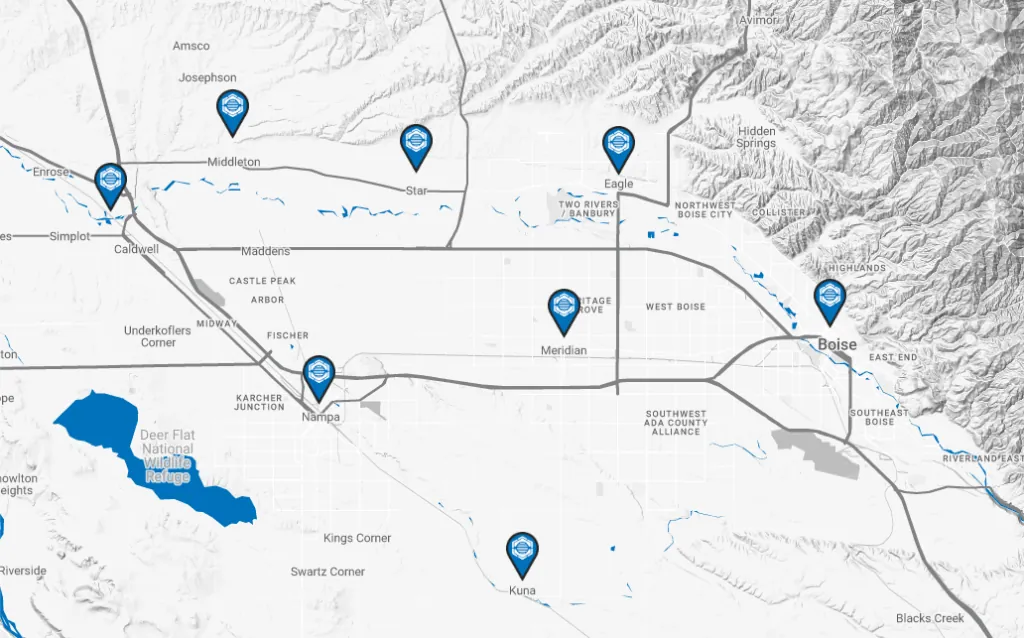
Serving All of Boise & The Valley
Our structural specialists are in Boise daily.
Boise Drainage Glossary FAQ
Is this glossary only for engineers?
Can definitions vary between contractors?
How do I use this when comparing bids?
What Boise Homeowners Say
"This glossary made our estimate review much easier."
"Great educational resource for understanding scope language."
"Clear definitions helped us ask better questions before approving work."
Why Homeowners Use Idaho Drainage Solutions
Licensed & Insured
Fully licensed in Idaho (RCE-57554) with comprehensive liability coverage for your protection.
Prompt Scheduling
We respect your time. Appointments scheduled within 24-48 hours for most estimates and inspections.
Satisfaction Guaranteed
We stand behind our work with industry-leading warranties and a commitment to getting it right.
Local Expertise
We know Treasure Valley soil, water tables, and building codes better than anyone.
No-Surprise Pricing
Clear, upfront quotes with no hidden fees. The price we quote is the price you pay.
Free Consultations
Every project starts with a free on-site evaluation. No pressure, just honest advice.

0% Interest Financing Available
Flexible payment options for your drainage projects.
Related Next Steps in Boise
Need help applying this to your property?
If this drainage glossary sounds familiar at your home, we can inspect the property and give you a clear scope.