
What Is Expansive Clay and Why It Matters in Boise
Learn what expansive clay is, how shrink-swell cycles affect Boise foundations, and how drainage and stabilization reduce movement risk.
Why Clay Soil Movement Damages Idaho Foundations
Need a property-specific answer?
We can inspect the issue on-site, document what is actually happening, and tell you whether it needs drainage work, waterproofing, structural repair, or simple monitoring.
- Treasure Valley soil and moisture context
- Photo-documented findings and next steps
- No-pressure recommendations built for your property
Expansive clay is soil that changes volume as moisture changes. It swells when wet, shrinks when dry, and repeats that movement cycle over time. For Boise-area homeowners, the importance of expansive clay is not just that it exists in the ground. It is that the ground under and around the home may not behave the same way from season to season or from one side of the structure to the other.
What expansive clay really means in practical terms
Homeowners often hear the phrase expansive clay and picture a rare or extreme soil condition, but the more practical definition is simpler. It is soil with enough clay behavior that moisture changes can alter its volume and strength. When that happens under a slab, beside a basement wall, or near a footing, the structure above begins reacting to those changes. Sometimes the movement is gradual. Sometimes it appears seasonal. Either way, the house is responding to the ground behaving differently than it did before.
This is one reason structure problems in Boise can feel confusing. A homeowner may notice cracks after a wet period, then see those cracks seem calmer later in the year. Or a door may bind more during one season than another. That inconsistency often leads people to assume the issue is minor or temporary. In many cases, what they are actually seeing is moisture-sensitive soil cycling under changing weather and irrigation conditions.
Expansive clay is therefore not just a geology term. It is a performance term. It describes soil that can change how it supports a structure as moisture changes around the property.
Why expansive clay matters in Boise and the Treasure Valley
Treasure Valley soils are mixed, and many properties include clay-influenced zones even if the entire lot is not uniformly clay-rich. That is important because homes do not need perfectly uniform expansive clay to experience movement problems. They only need enough variability for one section of the structure to experience different moisture conditions than another. If one side of the house is repeatedly wetted by downspouts or irrigation and the other side stays comparatively dry, the support conditions can drift apart over time.
Boise weather patterns make that more likely. Spring snowmelt, early summer irrigation, late-summer dry periods, and fall transitions all influence soil moisture differently. Add landscaping changes, patios, driveways, and altered grade, and the result can be an uneven moisture pattern around the home that reactivates movement again and again. That is why expansive clay issues often appear alongside drainage issues instead of in isolation.
For some homes, the clay behavior is mild and manageable with good moisture control. For others, especially where structural symptoms are already visible, the soil movement becomes part of a larger stabilization discussion. The important point is that the local context matters more than a generic label.
How shrink-swell cycles create structural symptoms
When clay absorbs moisture, it can swell and place upward or lateral stress on slabs, footings, and foundation walls. When it dries, it can shrink and leave reduced support or void-like conditions beneath parts of the structure. Homes do not tolerate that kind of non-uniform movement well. The result may be drywall cracks, slab distress, floor unevenness, door and window misalignment, or pressure against below-grade walls.
The critical issue is rarely one wet event or one dry event by itself. The real problem is repetition. Each cycle can slightly change support conditions, and repeated cycles amplify the distortion pattern the homeowner sees above grade. That is why cracks associated with expansive clay often reopen after repair or seem to change with the seasons. The finish is not failing on its own. It is following the structural movement beneath it.
Expansive clay can also interact with other mechanisms. A drainage failure may intensify the wetting phase. Poor grading may keep one side of the home wetter longer. Under those conditions, the clay is still part of the story, but moisture control becomes just as important as the soil type itself.
Signs clay movement may be affecting your home
One of the clearest signs is seasonal behavior. If cracks widen and relax, if doors stick more after wet periods or dry periods, or if floor irregularities become more noticeable at certain times of year, expansive clay may be part of the movement mechanism. Another sign is the combination of structural and moisture symptoms in the same general area of the property. For example, a corner of the house may show both repeated cracking and chronic wetness at the foundation perimeter.
Outdoor clues matter too. Soil that pulls away from the foundation during dry periods, persistent soft ground near one footing zone, or repeated ponding that loads one side of the home can all intensify clay-related movement. In Boise, those clues often show up before homeowners fully recognize the structural implications. By the time they notice repeated drywall cracking indoors, the yard has usually been communicating the moisture imbalance for some time.
It is also common for expansive clay symptoms to be mistaken for normal settlement. Sometimes settlement is part of the picture, but when moisture cycles clearly affect the severity of the symptoms, clay behavior deserves serious attention in the diagnosis.
How the risk is reduced in real properties
The first priority is moisture consistency. That does not mean keeping the ground wet. It means reducing severe swings in moisture around the structure. Proper grading, controlled roof runoff, correct sprinkler programming, and durable surface and subsurface drainage all help limit how drastically the soil changes from one season to another. This is why pages like drainage corrections and downspout routing are often part of the same conversation as structural cracking.
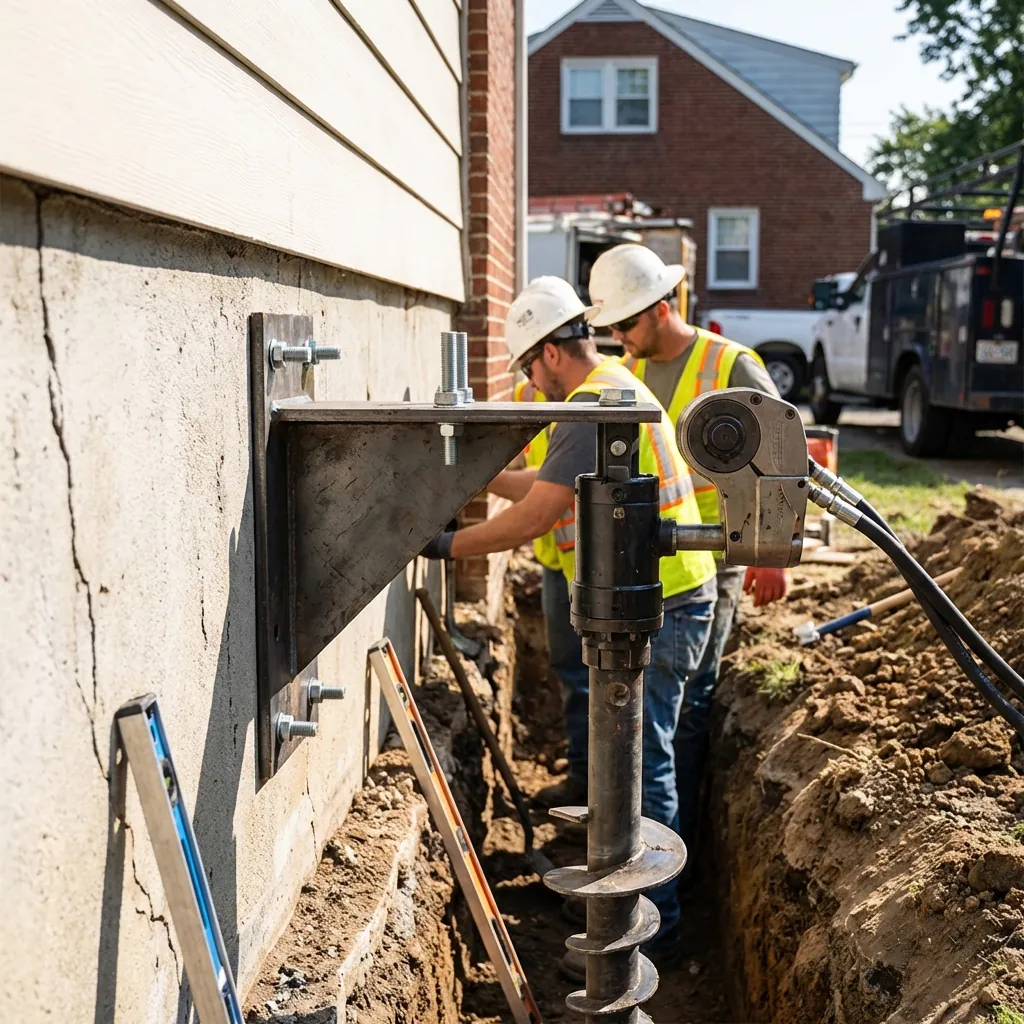
Where active structural movement is already present, the strategy may also include foundation stabilization. In those cases, structural support and moisture control are not competing options. They are complementary parts of the same repair logic. Structural work addresses the movement that has already developed. Drainage and moisture management reduce the chance that the same conditions will continue stressing the repaired zone.
The best plans are property-specific. A lightly affected home may need mostly drainage and monitoring. A more advanced case may require support systems plus ongoing water management. The right answer comes from understanding how severe the movement is and how strongly it is tied to moisture cycling.
What homeowners should do next
If you suspect expansive clay is part of your problem, start documenting patterns instead of isolated symptoms. Note whether cracks change seasonally, whether wet and dry periods influence doors or floors, and whether specific sides of the house stay wetter than others. That information often makes the diagnosis much clearer. It also helps determine whether the problem is mainly moisture-driven, mainly structural, or both.
For broader context, the USDA Web Soil Survey, USGS water resources, and NOAA climate data can help explain why soil and moisture vary so much across Idaho properties. But the most useful next step is still a site-specific evaluation that ties the soil behavior to what your structure is actually doing.
When homeowners understand expansive clay in practical terms, the repair path becomes clearer. The issue is not just that the soil expands. The issue is how that expansion and shrinkage are affecting the long-term stability of the home.
Book a Clay-Related Movement Assessment
We’ll evaluate whether soil moisture cycling is driving your cracks and recommend the right stabilization strategy.
Common Failure Signs in Boise
Water Intrusion
Moisture seeping through walls, floors, or foundation during rain or irrigation season.
Structural Warning Signs
Cracks in walls, sticking doors, or uneven floors indicating foundation movement.
Ongoing Maintenance Issues
Recurring problems that never seem to go away despite multiple repair attempts.
Serving All of Boise & The Valley
Our structural specialists are in Boise daily.
Boise Expansive Clay FAQ
Is expansive clay common in the Treasure Valley?
Can drainage really help expansive clay issues?
Do I always need piers if I have expansive clay?
What Boise Homeowners Say
"Best explanation we have received about how soil was affecting our foundation."
"They linked our drainage issues to structural symptoms in a way that finally made sense."
"Clear options and realistic plan for stabilization."
Why Homeowners Use Idaho Drainage Solutions
Licensed & Insured
Fully licensed in Idaho (RCE-57554) with comprehensive liability coverage for your protection.
Prompt Scheduling
We respect your time. Appointments scheduled within 24-48 hours for most estimates and inspections.
Satisfaction Guaranteed
We stand behind our work with industry-leading warranties and a commitment to getting it right.
Local Expertise
We know Treasure Valley soil, water tables, and building codes better than anyone.
No-Surprise Pricing
Clear, upfront quotes with no hidden fees. The price we quote is the price you pay.
Free Consultations
Every project starts with a free on-site evaluation. No pressure, just honest advice.

0% Interest Financing Available
Flexible payment options for your drainage projects.
Related Next Steps in Boise
Need help applying this to your property?
If this expansive clay sounds familiar at your home, we can inspect the property and give you a clear scope.