
Foundation Waterproofing vs Drainage: Boise Decision Guide
Compare foundation waterproofing and drainage strategies in Boise. Understand when coatings help, when drainage is required, and when combined systems are best.
Choose the Right System for Your Foundation Risk
Need a property-specific answer?
We can inspect the issue on-site, document what is actually happening, and tell you whether it needs drainage work, waterproofing, structural repair, or simple monitoring.
- Treasure Valley soil and moisture context
- Photo-documented findings and next steps
- No-pressure recommendations built for your property
Foundation waterproofing and drainage are related, but they are not interchangeable and they do not solve the same problems. Waterproofing helps resist moisture at the wall or floor surface. Drainage controls the amount of water and pressure reaching the structure. In Boise, homes with recurring seepage usually need pressure relief and water management first, not just a better coating.
Why homeowners get these two ideas mixed together
Both services are often described as ways to keep water out of the house, so it is easy to assume they are versions of the same repair. The difference becomes clear only when the actual failure mechanism is identified. A wall with mild dampness or vapor transfer is a different condition than a basement with water entering at the wall-floor joint. A foundation wall under hydrostatic pressure is dealing with a force problem, not just a surface problem.
This is where many Boise homeowners get stuck. They may have already tried a sealant, a paint product, or a partial repair that improved the appearance for a while but did not stop the leak from returning. In those cases, the problem is usually not that the product was applied poorly. The problem is that the system choice did not match the water behavior at the property.
Idaho Drainage Solutions treats the comparison as a diagnostic question first. Before anyone should recommend waterproofing, drainage, or both, the property needs to be understood in terms of water source, pressure, and discharge limitations.
What foundation waterproofing does well
Waterproofing is useful when the wall assembly needs added resistance to moisture penetration or when a complete below-grade system includes a barrier component as part of a broader strategy. It can help with certain dampness conditions, support durability of the wall assembly, and provide another layer of protection when drainage is already doing the work of reducing outside water load.
Where waterproofing falls short is when it is expected to act as the primary answer to ongoing water pressure. If the surrounding soil remains saturated and continues loading the wall, a coating alone is trying to resist the symptom rather than reduce the cause. That is why homes with recurring seepage, cove-joint leaks, and hydrostatic-pressure symptoms often do not stay dry with a surface treatment alone.
In practice, waterproofing is often valuable as part of a complete solution. It is simply not always the lead solution.
What drainage does well
Drainage reduces the amount of water and pressure that reach the structure in the first place. That is why it is often the core strategy in Boise basements and below-grade foundation problems. If the property is allowing water to collect near footings, load the basement wall, or remain trapped near the foundation perimeter, then drainage is addressing the physics that produce the leak.
Drainage is also broader than one product. It can involve exterior grade correction, downspout routing, surface intake, subsurface interception, interior drain tile, and dependable discharge through a pump or gravity outlet. The point is not just to catch water. The point is to reduce the pressure and route the water away reliably.
This is why drainage-first strategies are so common in Boise homes with recurring seepage. They work with the site conditions rather than asking the interior face of a wall to absorb all the consequences.
How Boise homeowners usually make the right choice
If a home has mostly light dampness, no active seepage, and little evidence of outside pressure, a waterproofing-focused approach may be enough with careful monitoring. If the home has repeated cove-joint seepage, floor moisture, or signs that the wall is being loaded by saturated soil, drainage usually needs to lead the design. If moisture issues are paired with movement or cracking, then the discussion expands to include foundation repair as well.
The decision should come from the symptom pattern. Where is water appearing? Is it liquid entry or general dampness? Does it happen after storms, after irrigation, during snowmelt, or all year? Are the exterior grades and discharge routes contributing? Those questions matter more than any brand name for a product. The right system follows the failure mechanism.
For many Boise properties, the real answer is drainage first with waterproofing used as a supporting measure where it meaningfully improves the assembly. That is a different conversation than coating first and hoping the water problem goes away.
Why partial solutions often fail
Homeowners naturally want the least invasive option that will work. The problem is that a partial solution is only economical if it addresses the real cause. A paint-on product that leaves hydrostatic pressure in place is often a delay tactic rather than a repair. A drain component without a complete discharge path may collect water but not solve the long-term problem. Structural repairs without water control can also leave the foundation in a stressed environment.
This is why a system comparison review is valuable. It helps separate what is necessary from what is merely being proposed because it sounds familiar. When homeowners understand the difference between moisture resistance and pressure relief, they usually make better decisions and avoid paying twice for the same failure pattern.
That logic applies whether the issue is a finished basement, an unfinished utility room, or an early-stage warning sign that has not yet become an obvious leak.
What to look at before deciding
Walk the exterior and look for short downspout discharge, negative grade, perimeter wetting, or visible low spots near the foundation. Inside, note whether the symptom is general dampness, recurring seepage, or water entering at specific joints and penetrations. Ask whether the proposed scope includes pressure relief, discharge planning, and verification, or whether it is limited to surface treatment.
Reference sources such as the USDA Web Soil Survey, USGS water resources, and NOAA climate data help explain why Boise homes often experience mixed soil and seasonal moisture conditions. But the most important answer is still local: what is your foundation actually experiencing right now?
Once that question is answered correctly, waterproofing and drainage stop sounding like competing services and start looking like tools used for the right job in the right order.
Free Waterproofing vs Drainage Assessment
We’ll identify your actual failure mechanism and recommend the least invasive system that reliably solves it.
Common Failure Signs in Boise
Recurring Moisture Despite Sealing
Water problems returning after paint, sealant, or patch-only approaches.
Multiple Leak Pathways
Water entry at walls, floor joints, and utility penetrations.
Unclear Scope Decisions
Uncertainty about whether to seal walls, add drainage, or do both.
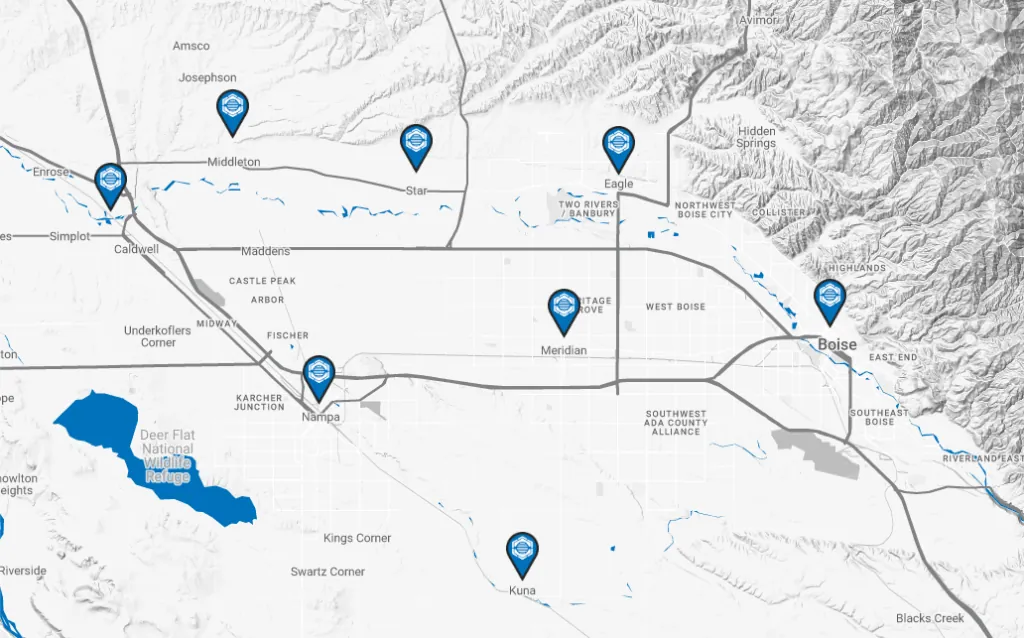
Serving All of Boise & The Valley
Our structural specialists are in Boise daily.
Boise Waterproofing vs Drainage FAQ
Can waterproof paint replace drainage?
Do I always need both waterproofing and drainage?
What is most common in Boise basements?
What Boise Homeowners Say
"They helped us choose the right scope instead of overselling. Very clear explanation."
"Great diagnostic process. We now understand exactly why past fixes failed."
"Professional and practical guidance with real long-term value."
Why Homeowners Use Idaho Drainage Solutions
Licensed & Insured
Fully licensed in Idaho (RCE-57554) with comprehensive liability coverage for your protection.
Prompt Scheduling
We respect your time. Appointments scheduled within 24-48 hours for most estimates and inspections.
Satisfaction Guaranteed
We stand behind our work with industry-leading warranties and a commitment to getting it right.
Local Expertise
We know Treasure Valley soil, water tables, and building codes better than anyone.
No-Surprise Pricing
Clear, upfront quotes with no hidden fees. The price we quote is the price you pay.
Free Consultations
Every project starts with a free on-site evaluation. No pressure, just honest advice.

0% Interest Financing Available
Flexible payment options for your drainage projects.
Related Next Steps in Boise
Need help applying this to your property?
If this waterproofing vs drainage sounds familiar at your home, we can inspect the property and give you a clear scope.