
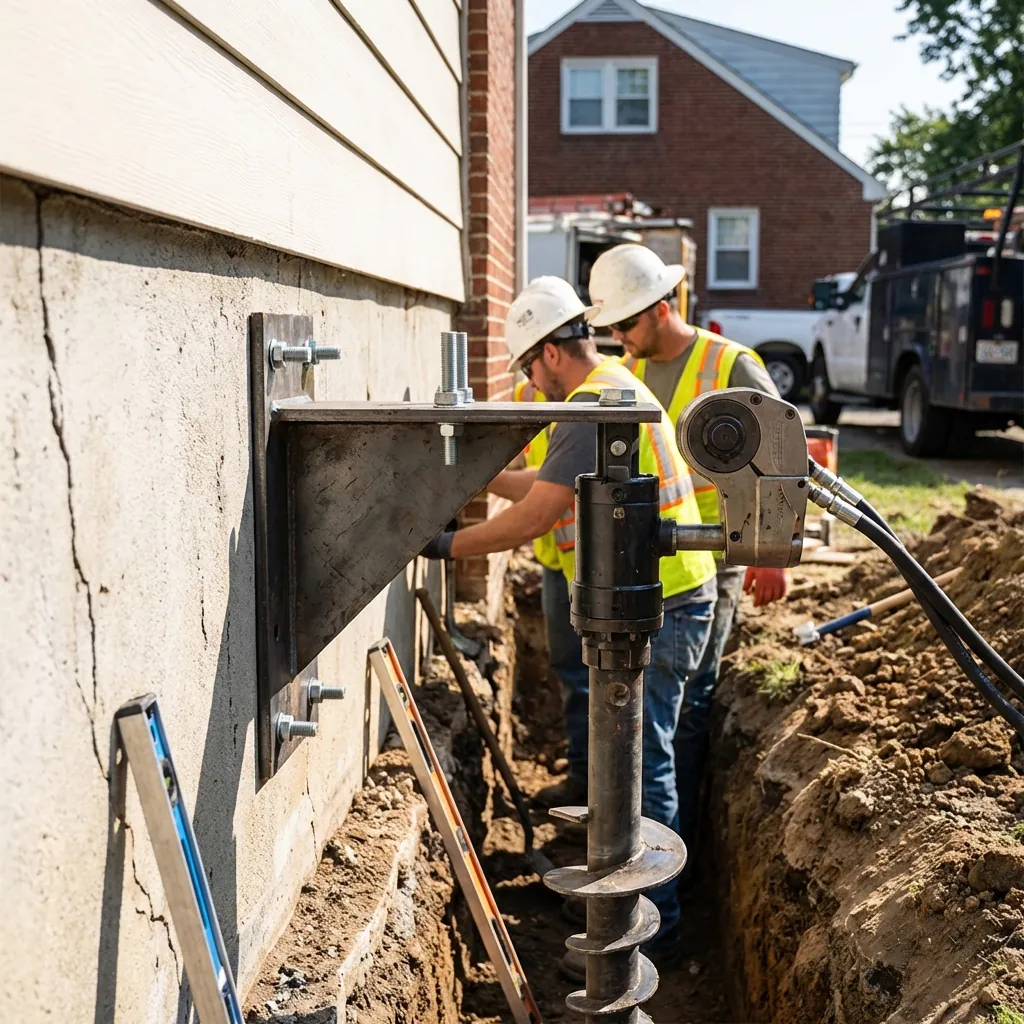
Why Are Boise Homes Cracking?
Learn why Boise homes develop cracks including settlement, expansive soils, moisture cycling, hydrostatic pressure, and structural load shifts.
Understand the Mechanics Behind Cracks Before They Spread
Need a property-specific answer?
We can inspect the issue on-site, document what is actually happening, and tell you whether it needs drainage work, waterproofing, structural repair, or simple monitoring.
- Treasure Valley soil and moisture context
- Photo-documented findings and next steps
- No-pressure recommendations built for your property
Most cracking in Boise homes is not just a cosmetic issue or a sign that a house is simply "aging." Cracks usually appear because part of the structure is moving differently from another part. That movement may be small at first, but once it begins to distort how loads travel through walls, slabs, and framing, the home starts showing visible evidence of stress.
Why Boise homes crack in the first place
A house cracks when its support conditions change. In Boise, those support changes are often driven by soil variability and moisture variability working together. One side of a structure may get wetter than the other because of roof runoff, irrigation overspray, poor grading, or slow drainage. Another section may dry and shrink faster. One footing may rest on stronger native material while another bears on fill that consolidates over time. When those support conditions stop acting uniformly, the house responds by redistributing stress, and that stress shows up as cracks.
That is why Idaho Drainage Solutions looks at cracking as a whole-property problem instead of a drywall problem. The visible crack is only the symptom. The important question is what changed under or around the structure to create it. In some homes the answer is differential settlement. In others it is hydrostatic pressure against a basement wall, repeated shrink-swell cycles in clay-rich soil, or chronic drainage failure at one corner of the lot. Sometimes more than one of those mechanisms is active at the same time.
Boise also has a broad mix of housing ages and lot conditions. Older neighborhoods may have decades of drainage modifications layered over original grading, while newer subdivisions can reveal cracking after early settlement and full irrigation use. That is why two homes on the same street can show different cracking behavior. The structure matters, but the way water and soil interact at each lot matters just as much.
The most common local drivers behind cracking
Differential settlement is one of the leading causes. It occurs when one section of the foundation loses support faster than another. That loss may come from compressible fill, erosion, uneven wetting, or long-term soil consolidation. When the support changes are uneven, the building bends slightly and the finishes tell on the structure. Diagonal drywall cracks around doors and windows are common because openings naturally concentrate stress.
Moisture cycling is another major factor in the Treasure Valley. Clay-influenced soils swell when wet and shrink when dry. When one side of the home experiences different moisture conditions than the other, the ground moves unevenly. Homeowners sometimes notice this as cracks that appear to worsen in one season and calm down in another. That seasonal behavior does not mean the issue is harmless. It often means the soil movement cycle is active and the house is responding to it.
Hydrostatic pressure can also drive cracking, particularly below grade. Saturated soil exerts force against basement walls and foundation sections. If drainage is poor and water loads one wall repeatedly, horizontal cracking or inward movement can develop. In other cases, frost-thaw transitions and shallow moisture changes contribute to slab or flatwork cracking near exterior edges. Those patterns may start outdoors, but if the water problem remains in place long enough, the structural signs can migrate inward.
What different crack patterns often suggest
Not every crack means the same thing, but crack shape and location provide useful clues. Diagonal cracks at the corners of windows and doors often point toward differential movement because those openings are natural stress concentrations. Stair-step cracks in masonry or block are another common sign that one part of the structure is moving differently than the rest. Slab cracks become more concerning when they are paired with measurable elevation change, separation at finishes, or door alignment issues.
Horizontal basement wall cracks deserve special attention because they can indicate lateral soil pressure rather than simple settlement. If the wall is also bowing, leaking, or showing displacement at one section, a purely cosmetic repair is the wrong response. The structure is telling you the wall is being loaded from the outside. In Boise homes, that often brings the discussion back to perimeter drainage, saturated soil, and whether water is being retained too close to the foundation.
Hairline drywall cracks by themselves are not always serious. Homes expand, contract, and settle slightly over time. The concern rises when cracks return after repair, widen noticeably, appear in several areas at once, or show up alongside other symptoms such as sloping floors, doors that stick across multiple rooms, or visible changes in exterior masonry. Those combinations suggest active movement rather than one-time finish shrinkage.
Why drainage problems so often sit behind structural cracking
Drainage matters because water changes soil behavior. When one side of the house is repeatedly loaded by roof discharge, irrigation concentration, or a negative grade, the soil there behaves differently from the soil on the dry side. It may soften, erode, swell, or simply remain unstable longer after weather events. The structure does not care whether the load change came from a storm, a downspout, or a sprinkler valve. It only responds to the fact that support has changed.
This is why crack repair without water management so often disappoints homeowners. Sealing the visible symptom can make the wall look better for a while, but if moisture is still concentrating near the footing or basement wall, the support conditions remain unresolved. The same is true when a homeowner focuses only on structural reinforcement without correcting the outside water load. Durable work usually combines the right structural response with the right moisture-control response. That might mean pairing foundation repair planning with drainage correction, or beginning with a foundation inspection to determine which issue is primary.
Boise houses near slope transitions, older hardscape, or clay-sensitive zones are especially prone to this moisture-structure relationship. The crack may appear inside, but the real cause often begins outside.
How we separate cosmetic cracking from real movement
The key is not to stare at one crack in isolation. A sound inspection looks for pattern, distribution, and progression. Are cracks concentrated on one side of the house? Are they aligned with doors that no longer swing properly? Is the floor subtly lower at the same end of the structure? Do the cracks correspond to known drainage problems or to areas where downspouts discharge near the foundation? Have they reopened after previous repairs? Those are the kinds of questions that move the evaluation from guesswork to engineering logic.
We also look at timing. A crack that slowly returns each wet season tells a different story than a stable hairline that has not changed in years. A wall crack paired with musty odor or wet basement corners tells a different story than a single cosmetic seam in a room with no other distress. The most useful diagnosis always combines visible interior symptoms with exterior site conditions, because structural movement is usually the result of both.
Homeowners can help the process by documenting when cracks appeared, whether they change over time, and whether they line up with moisture events. That history often clarifies whether the house is dealing with one old event, ongoing seasonal movement, or an active drainage failure that has begun affecting the structure.
When you should act quickly
Some cracking can be monitored, but widening cracks, multiple sticking doors, new floor slope, bowing basement walls, or repeated seasonal changes should not be ignored. The same is true if cracking appears together with wet basement areas, saturated perimeter soil, or visible exterior settlement. In those cases, waiting rarely makes the repair simpler. It usually gives the underlying moisture or support problem more time to spread its effects.
Acting early does not always mean a large repair is required. Sometimes the right answer is improved drainage and close monitoring. Sometimes it is targeted stabilization at one section of the foundation. The value of early action is that the options stay broader and the repair scope stays more controlled. Once distortion increases, finish damage grows, and water begins affecting more of the structure, the conversation becomes more expensive.
The goal is not to overreact to every crack. The goal is to recognize which patterns are communicating real risk and to investigate those before the structure pays the price for delay.
What Boise homeowners should do next
If you are seeing cracking in your Boise home, begin by treating it as a site-and-structure question, not a patch-and-paint question. Walk the outside perimeter. Look for grade that slopes back toward the house, downspouts that discharge too close to the foundation, soft or persistently wet soil, and hardscape that may be trapping water. Inside, note whether doors, windows, floors, and wall finishes are showing related changes. That bigger picture is what reveals whether you are dealing with harmless cosmetic shrinkage or active structural movement.
It can also help to review broader reference tools such as the USDA Web Soil Survey, USGS water resources, and NOAA climate data for context about local soil and moisture behavior. But those sources are only supporting context. The real answer comes from evaluating your structure and your lot together.
When homeowners understand why cracking started, they can choose the right response with confidence. That is the difference between repeated cosmetic repairs and a repair strategy that actually stabilizes the home.
How Boise neighborhood context changes the diagnosis
Cracking in an older Boise Bench home often has a different site history than cracking in a newer subdivision home. Older neighborhoods may have decades of hardscape changes, downspout reroutes, tree growth, and grading revisions that slowly changed support conditions. Newer homes, by contrast, may reveal cracking after the first several years of settlement and full irrigation use. Foothill-transition homes bring another layer of complexity because slope, runoff energy, and retaining conditions can all influence how one part of the structure is loaded.
That is why a good crack assessment is never just about the wall itself. It also considers the neighborhood style of construction, the age of the lot, how drainage has been modified over time, and whether local soil and water conditions make certain mechanisms more likely. The better the context, the more accurate the repair strategy. That is especially important when deciding whether the right next step is monitoring, drainage correction, structural stabilization, or a combination of all three.
What responsible monitoring looks like
Not every Boise crack requires immediate structural work, but responsible monitoring is more disciplined than simply waiting and hoping. Homeowners should photograph the crack, note its location, watch whether doors and windows in the same area change behavior, and keep track of whether exterior wetness or runoff patterns line up with the symptom. Monitoring is useful only when it creates a baseline that can reveal change.
If the crack reopens after repair, widens across seasons, or starts to pair with floor movement and moisture evidence, the monitoring phase has done its job by showing that the structure is not static. At that point, the decision can move forward with far more clarity than it would have if the homeowner had relied on memory alone. In structural diagnosis, good documentation often prevents both overreaction and underreaction.
That same discipline protects homeowners from spending money in the wrong order. A short period of observation, when done intentionally, can reveal whether the issue is stable, moisture-coupled, or actively progressing. That is often the difference between a confident repair plan and a cycle of repeated cosmetic fixes.
For many homeowners, that simple recordkeeping is what turns uncertainty into a useful repair conversation. Patterns that feel vague in memory often become obvious once they are documented against weather, irrigation, and seasonal changes.
Get a Professional Crack and Movement Assessment
We’ll document crack patterns, identify likely causes, and provide a prioritized stabilization plan.
Common Failure Signs in Boise
Water Intrusion
Moisture seeping through walls, floors, or foundation during rain or irrigation season.
Structural Warning Signs
Cracks in walls, sticking doors, or uneven floors indicating foundation movement.
Ongoing Maintenance Issues
Recurring problems that never seem to go away despite multiple repair attempts.
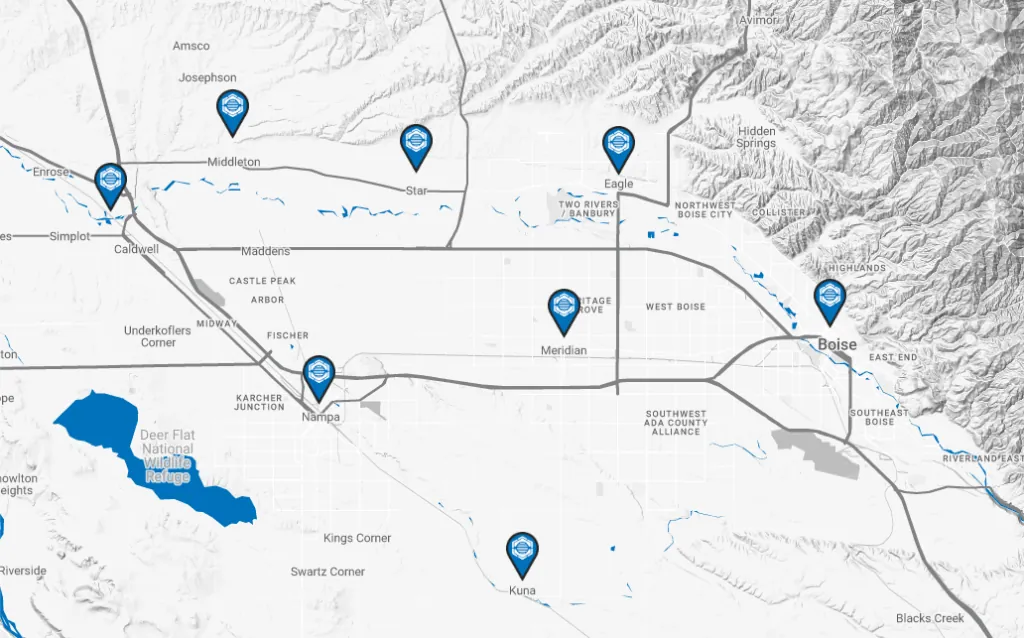
Serving All of Boise & The Valley
Our structural specialists are in Boise daily.
Boise Home Cracking Causes FAQ
Are all wall cracks structural?
Can drainage really cause cracking?
Is crack sealing enough?
What Boise Homeowners Say
"They gave us clear options for foundation cracking and explained the real cause."
"Professional team that diagnosed movement patterns accurately."
"Great structural guidance and honest recommendations."
Why Homeowners Use Idaho Drainage Solutions
Licensed & Insured
Fully licensed in Idaho (RCE-57554) with comprehensive liability coverage for your protection.
Prompt Scheduling
We respect your time. Appointments scheduled within 24-48 hours for most estimates and inspections.
Satisfaction Guaranteed
We stand behind our work with industry-leading warranties and a commitment to getting it right.
Local Expertise
We know Treasure Valley soil, water tables, and building codes better than anyone.
No-Surprise Pricing
Clear, upfront quotes with no hidden fees. The price we quote is the price you pay.
Free Consultations
Every project starts with a free on-site evaluation. No pressure, just honest advice.

0% Interest Financing Available
Flexible payment options for your drainage projects.
Related Next Steps in Boise
Need help applying this to your property?
If this home cracking causes sounds familiar at your home, we can inspect the property and give you a clear scope.