
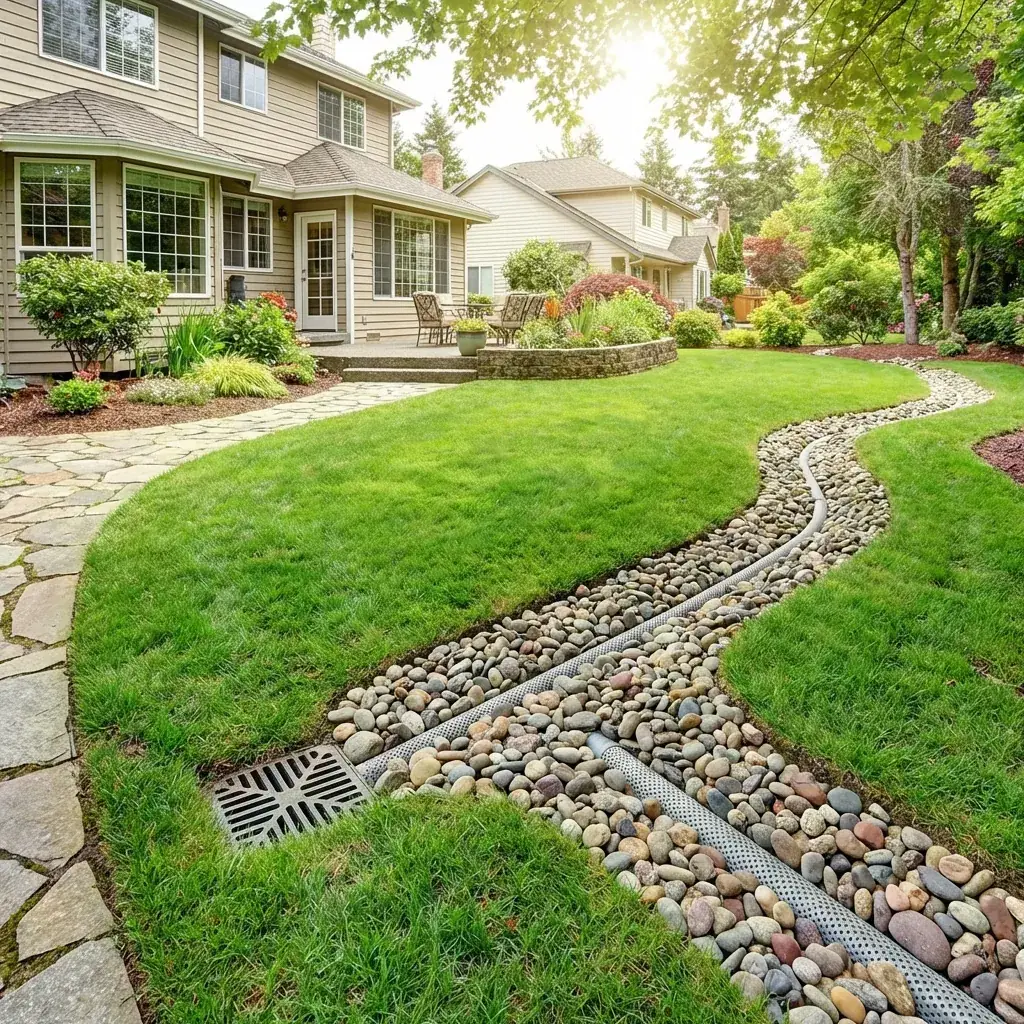
Why Is My Yard Flooding in Boise?
Learn why Boise yards flood and how to diagnose drainage failure patterns including grade issues, runoff concentration, clay soils, and discharge limitations.
Root-Cause Analysis for Recurring Yard Water Problems
Need a property-specific answer?
We can inspect the issue on-site, document what is actually happening, and tell you whether it needs drainage work, waterproofing, structural repair, or simple monitoring.
- Treasure Valley soil and moisture context
- Photo-documented findings and next steps
- No-pressure recommendations built for your property
If your yard floods repeatedly in Boise, the problem is almost never random. Water is responding to grade, soil resistance, roof runoff, irrigation habits, hardscape layout, and the limits of whatever discharge path exists today. When homeowners understand those factors together, the pattern becomes much easier to diagnose and much easier to solve permanently.
Why yard flooding is so common in Boise
Boise homeowners are often surprised when a yard stays soggy even after only light rain or a normal sprinkler cycle. The surprise usually comes from comparing the yard to what they see at the surface instead of what is happening below grade. In much of the Treasure Valley, water does not always move straight down. It can spread sideways through denser soil layers, stall above compacted fill, collect along patio edges, or follow the easiest path toward a low point that may be only a few feet from the house. Once that low point saturates, the lawn becomes soft, puddles linger, and the same wet area appears over and over again.
That pattern is especially common on lots where landscape changes happened after the house was built. A new patio, planter border, retaining edge, fence line, or decorative berm can unintentionally interrupt the original drainage plan. In older Boise neighborhoods, decades of small grade changes often matter more than one major storm. In newer subdivisions, the opposite can happen: the lot may have looked acceptable when the home was sold, but after one or two irrigation seasons and a round of natural settlement, subtle low areas begin trapping water in places that were not obvious during construction.
Another reason Boise yards flood so often is that irrigation can add more water over time than a single short weather event. Homeowners sometimes think they have a rain problem when they really have a water management problem. If the soil can only absorb a limited amount each cycle and the sprinklers apply more than that, the excess has to go somewhere. It may run across the surface, sink into one part of the lot and reappear somewhere else, or build up against the foundation perimeter where the consequences are more serious than a wet lawn.
What is usually driving the flooding pattern
The first major driver is grade. Even a yard that looks flat to the eye can have enough pitch to move water in the wrong direction. If the lawn slopes subtly back toward the home, toward a fence corner, or toward a depressed planter bed, the wet spot you see is only the final collection point. The source may be much farther upslope. That is why adding topsoil to the puddle itself rarely solves the problem for long. Unless the full flow path is corrected, the water simply finds the next low place.
The second driver is soil behavior. Boise-area lots can include a mix of compacted construction soil, imported fill, and finer native layers that absorb moisture unevenly. One section of turf may seem to drain normally while another holds water for a day or two after the same irrigation cycle. Homeowners often read that as a mystery or a one-off flaw in the lawn, but it is usually telling you that the yard has variable permeability and poor continuity of flow. The water is not disappearing. It is being delayed, redirected, or trapped.
The third driver is discharge. A drain is only as good as its ability to move collected water to a durable outlet. Idaho Drainage Solutions regularly sees yards where the homeowner added one basin or one short French drain but never solved where the water would go next. If the pipe is undersized, the slope is weak, the outlet is blocked, or the water is discharged into another vulnerable area of the lot, the flooding simply changes shape. The right question is not whether a drain exists. The right question is whether the entire intake-to-discharge system matches the water load on that property.
How to read the symptoms before spending money
Homeowners can save a great deal of time and money by documenting the flooding pattern before choosing a solution. Start by watching where the wet area begins, not just where the puddle remains. A yard that floods immediately during irrigation often has a surface-flow or application-rate problem. A yard that looks fine during watering but turns soft several hours later may be showing subsurface movement or delayed saturation from an upslope source. A zone that stays wet longest near a downspout outlet usually points toward roof runoff concentration, while a strip that parallels the foundation often suggests grade reversal or repeated perimeter loading.
Timing matters just as much as location. If the same area floods during spring melt, irrigation season, and summer storms, then the issue is probably structural to the site design rather than seasonal bad luck. If the flooding appears only after a landscape renovation or after neighboring work changed drainage patterns, the diagnosis may point to interrupted flow paths or a new low point. If flooding is worse after sprinkler cycles than after rain, the irrigation schedule itself may be overwhelming the soil intake rate. That distinction matters because a sprinkler programming change can reduce symptoms quickly, but it should still be paired with a full drainage review if the yard already has poor grade and weak outlet routing.
A professional drainage inspection goes beyond looking at puddles. It traces inflow, maps the route water wants to take, verifies whether existing drains actually function, and checks whether flooding is loading the foundation, crawl space, basement wall, or lower hardscape. That is why pages like yard drainage solutions and landscape grading are useful reference points, but they should be applied only after the real source water and movement pattern are identified.
Boise-specific flooding patterns we see most often
On the Boise Bench and in older infill neighborhoods, flooding problems often come from layers of historical changes. A driveway may have been repoured with a slightly different pitch, a side yard may have been narrowed by fencing or planters, and downspouts may have been rerouted several times without a true outlet plan. Those yards often need a complete review of how water crosses the property, because the visible wet spot is usually the result of many small decisions accumulated over years.
In West Boise and newer subdivision corridors, the issue is often more subtle. The lot may have been close to workable at the time of construction, but once the ground settled and the irrigation system began running through full seasons, weak grade became obvious. A backyard that feels spongy near the patio, or a side yard that stays muddy along one fence line, is often showing the effect of settlement combined with poor drainage continuity. These yards respond well when grading, intake placement, and outlet routing are designed together rather than as isolated fixes.
In foothill-transition areas, runoff energy becomes a bigger factor. Homes that receive concentrated flow from upslope areas may need interception before the water reaches the primary lawn or foundation zone. In those cases, the yard may be flooding not because the lawn is incapable of drying, but because the property is receiving more water than it was designed to carry safely. That is when stormwater management and more engineered collection strategies become part of the conversation.
When a yard problem becomes a house problem
A flooded lawn is inconvenient. A flooded lawn that repeatedly loads the foundation is a structural risk. If standing water forms near footing lines, crawl space vents, basement windows, or the wall-floor joint of a lower level, the problem has moved beyond landscaping. Repeated saturation can soften support soils, increase hydrostatic pressure, elevate crawl space humidity, and contribute to the kinds of symptoms homeowners later notice indoors: musty odor, sticking doors, recurring drywall cracks, and damp basement finishes.
This is why Idaho Drainage Solutions treats yard flooding as part of a whole-property moisture system. The lawn, hardscape, foundation edge, crawl space, and basement are connected. If the same water that ponds in the backyard is also wetting one side of the house over and over again, then the correction plan needs to protect the structure first and the landscaping second. In that situation, pages like foundation inspection, crawl space repair, and basement waterproofing become relevant because the drainage issue is no longer isolated to the yard.
One of the biggest mistakes homeowners make is waiting until the outdoor symptom turns into an indoor repair. By the time water intrusion or structural movement appears inside, the yard has often been communicating the problem for months or years. Early correction is usually simpler and less invasive than waiting for moisture to affect finishes, support conditions, or indoor air quality.
What durable correction usually looks like
The right solution depends on whether water is moving on the surface, through the soil, or both. Some properties need regrading because the basic slope is wrong. Others need better surface collection at patios, sidewalks, and low lawn zones. Some need subsurface interception because water is moving laterally through soil and reappearing downslope. Many need a combination of those elements with a stronger discharge path. The common denominator is that the system has to match the source water instead of reacting to the symptom alone.
That is why one extra drain is not always the answer. A basin without enough intake area clogs or bypasses. A French drain without reliable fall or cleanouts underperforms. A grading correction without outlet planning simply pushes the problem somewhere else. A durable fix usually begins with the house and other high-risk areas, then works outward to protect the lot as a whole. The goal is not just to dry one patch of turf. The goal is to create predictable, controlled water movement across the property during all the conditions that matter in Boise: spring melt, irrigation season, thunderstorms, and freeze-thaw transitions.
Homeowners comparing options should ask whether the proposal addresses source water, conveyance, discharge, verification, and maintenance. If it does not, it is probably incomplete. Good drainage work is not just about excavation. It is about design logic.
What to do next if your yard keeps flooding
If your yard floods in the same place repeatedly, document it now instead of waiting for a bigger event. Photograph the area during watering or after precipitation, then again several hours later. Note whether the wetness is tied to downspouts, irrigation zones, patios, or fence lines. Check whether the soft area is near the house, and whether the wetness lingers long enough to affect crawl space vents, basement windows, or perimeter soil. That information makes a professional inspection more accurate and helps separate a simple adjustment from a full drainage design problem.
It is also worth reviewing public reference sources such as the City of Boise drainage resources, NOAA climate data, and the USDA Web Soil Survey if you want added context. Those tools do not replace a site inspection, but they do reinforce the same point: water behavior is local, and durable solutions come from matching the correction to the actual conditions of the property.
When Boise homeowners get a clear diagnosis, yard flooding stops feeling random. It becomes a solvable engineering and site-planning problem. That clarity is what keeps a recurring wet spot from turning into long-term structural and moisture damage.
Common fixes that sound reasonable but often fail
Homeowners are often told to add topsoil, re-seed the wet area, install one extra basin, or shorten the sprinkler cycle and see what happens. Those steps can be helpful in very specific conditions, but they frequently fail because they are directed at the puddle instead of at the water path. If the yard still receives concentrated runoff, still lacks positive grade, or still has no reliable discharge route, the flooding just changes shape and returns later.
Another common mistake is solving only the visible surface problem while ignoring what is happening below grade. A yard may look drier for a short time after cosmetic grading or minor landscaping changes, yet still be loading the foundation perimeter through subsurface movement. That is why Idaho Drainage Solutions prioritizes water-source identification, flow-path mapping, and structural proximity over quick cosmetic changes. The point is not to make the yard look dry for a week. The point is to make the property perform correctly through Boise’s real weather and irrigation cycles year after year.
Get a Clear Yard Flooding Diagnosis
We’ll show you the exact cause pathway and build a correction plan that solves the problem at its source.
Common Failure Signs in Boise
Water Intrusion
Moisture seeping through walls, floors, or foundation during rain or irrigation season.
Structural Warning Signs
Cracks in walls, sticking doors, or uneven floors indicating foundation movement.
Ongoing Maintenance Issues
Recurring problems that never seem to go away despite multiple repair attempts.
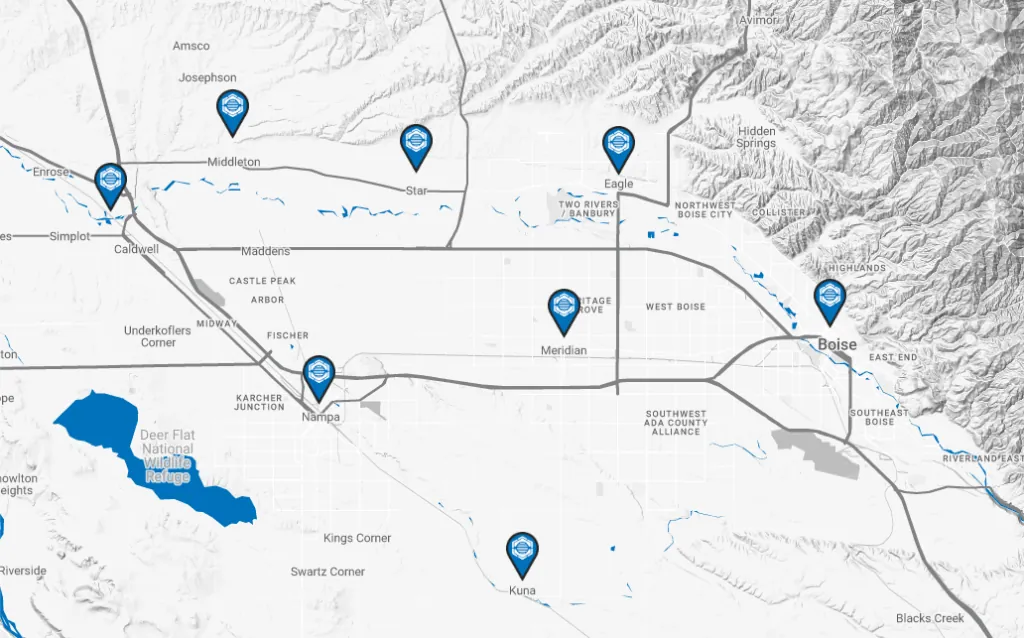
Serving All of Boise & The Valley
Our structural specialists are in Boise daily.
Boise Yard Flooding Causes FAQ
Can I solve yard flooding by adding one more drain?
Does flooding always mean I need excavation?
How quickly should I act if water reaches my foundation?
What Boise Homeowners Say
"They found why our flooding kept returning and fixed it permanently."
"Finally got a real explanation instead of random quick fixes."
"Great diagnosis and great execution. Our yard drains correctly now."
Why Homeowners Use Idaho Drainage Solutions
Licensed & Insured
Fully licensed in Idaho (RCE-57554) with comprehensive liability coverage for your protection.
Prompt Scheduling
We respect your time. Appointments scheduled within 24-48 hours for most estimates and inspections.
Satisfaction Guaranteed
We stand behind our work with industry-leading warranties and a commitment to getting it right.
Local Expertise
We know Treasure Valley soil, water tables, and building codes better than anyone.
No-Surprise Pricing
Clear, upfront quotes with no hidden fees. The price we quote is the price you pay.
Free Consultations
Every project starts with a free on-site evaluation. No pressure, just honest advice.

0% Interest Financing Available
Flexible payment options for your drainage projects.
Related Next Steps in Boise
Need help applying this to your property?
If this yard flooding causes sounds familiar at your home, we can inspect the property and give you a clear scope.