
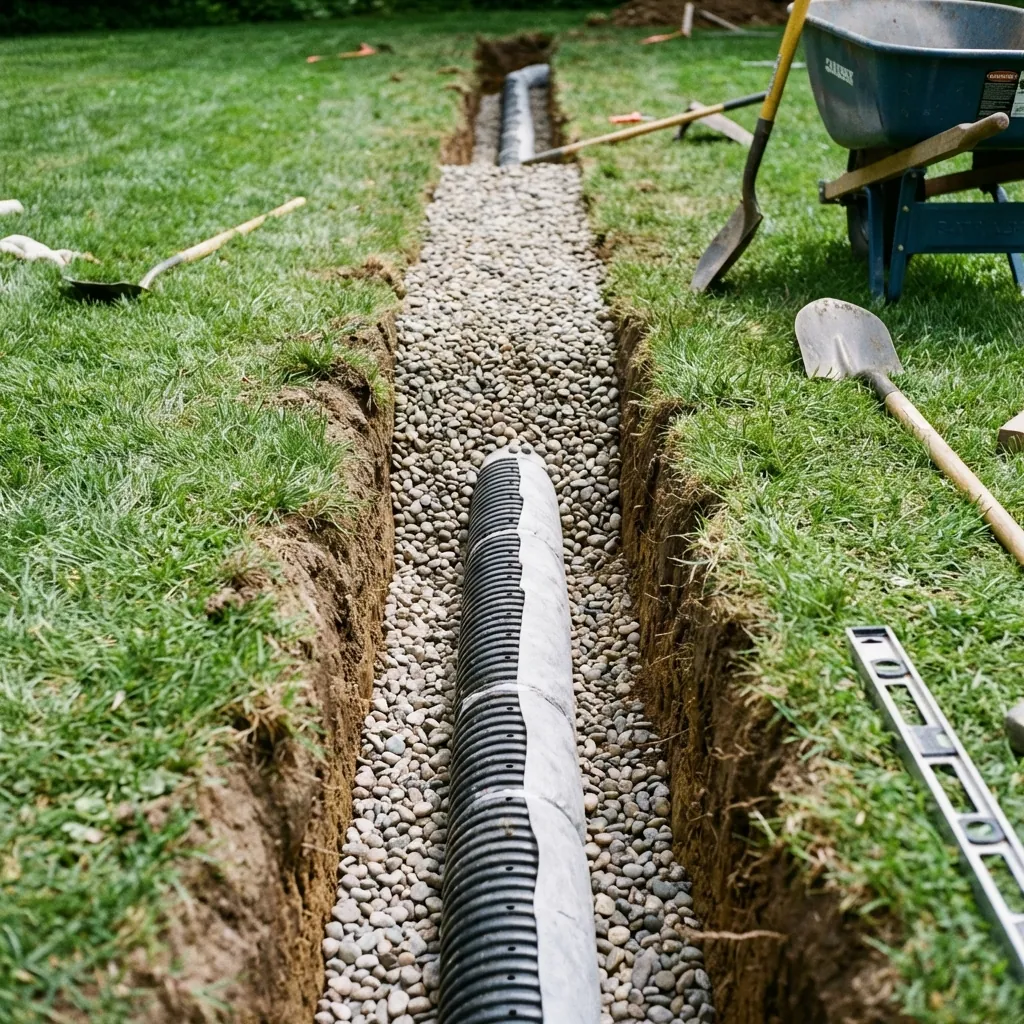
Expert French Drain Installation
Custom-engineered French drain systems for Boise homes. Stop wet basements and soggy yards with our 30+ year solution.
The 30+ Year Solution for Wet Yards
Protect your home from Boise’s high water table and clay soil with a custom-engineered French drain system.
Why You Need a French Drain in Boise
In Boise and the surrounding Treasure Valley, three distinct factors combine to create a "perfect storm" for foundation water damage:
- The Clay Layer: Hardpan clay prevents deep soaking, pushing water horizontally toward your foundation.
- Flood Irrigation: Canal water raises the water table for 6 months a year, creating hydrostatic pressure.
- Foothills Runoff: "Slope creep" and subsurface flow can destabilize foundations if not intercepted.
How Our System Works
We don't believe in "band-aid" solutions. Here is our rigorous 5-step process:
- Inspection & Laser Grading: Identifying the water source and ensuring a 1% gravity slope.
- Strategic Excavation: Digging 18-24" trenches while protecting your landscaping.
- The "Burrito Wrap": Lining the trench with heavy-duty geotextile fabric to block silt—crucial for Boise soil.
- Pipe & Rock: Installing rigid PVC (not crushable corrugated pipe) and washed drain rock.
- Restoration: Re-sodding or xeriscaping so your yard looks untouched.
Why Professional Installation Matters
DIY drains often fail due to wrong slope, poor materials (flexible pipe), or lack of filtration fabric. We offer a 5-Year Transferable Warranty because we build it right the first time.
French Drains vs Surface Drains
French drains manage subsurface water. Surface drains manage runoff on top of hardscape and landscape. Many Boise properties need both to fully control water movement.
- French drains: intercept groundwater and shallow subsurface flow.
- Surface drains: capture visible sheet flow at patios, driveways, and low points.
- Combined systems: best for lots with both ponding and foundation-adjacent saturation.
See related pages: channel drains and catch basin installation.
Cost, Timeline, and Maintenance
Cost depends on trench length, depth, disposal, restoration scope, and discharge complexity. Most residential projects are completed in one to three days. We recommend annual inlet and outlet checks before spring runoff to keep system performance consistent.
Common Failure Signs in Boise
Water Intrusion
Moisture seeping through walls, floors, or foundation during rain or irrigation season.
Structural Warning Signs
Cracks in walls, sticking doors, or uneven floors indicating foundation movement.
Ongoing Maintenance Issues
Recurring problems that never seem to go away despite multiple repair attempts.
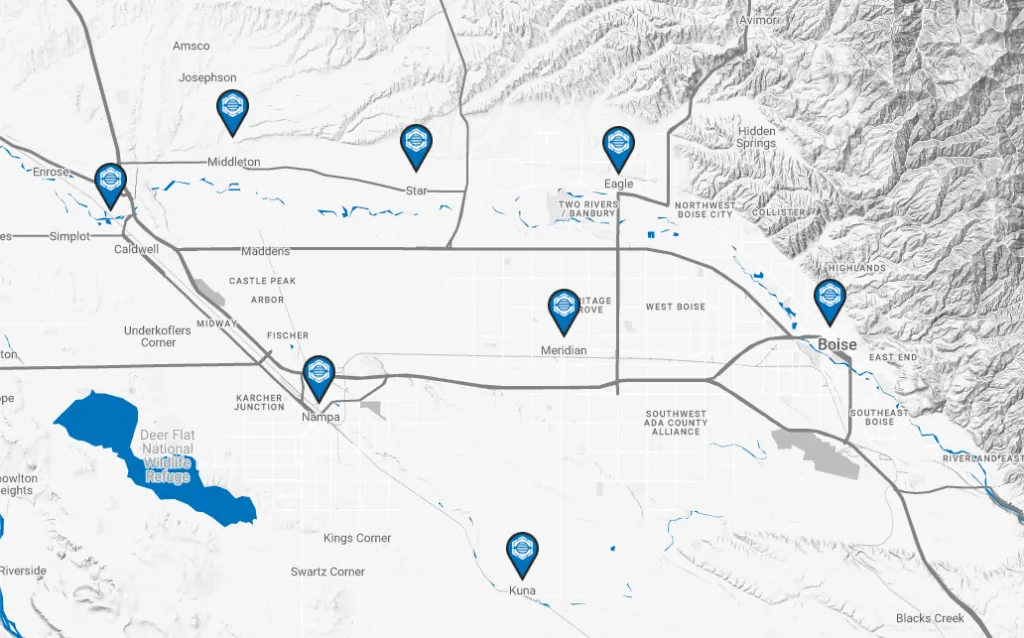
Serving All of Boise & The Valley
Our structural specialists are in Boise daily.
Boise French Drains FAQ
Do I need a French drain or a sump pump?
Will it kill my grass?
Can you install in winter?
How do I know if I need a surface drain instead of a French drain?
What Boise Homeowners Say
"I can't say enough about the crew sent to me today to put in a French drain and drainage to another place in my yard. They were professional, kind, and did amazing work."
"Idaho Drainage Solutions put a much needed French drain in my basement. They are one of the most personable and professional contractors I've ever worked with."
"The guys did a great job. Installed a French drain in our yard, the job was done without damaging our lawn which was our biggest concern."
Why Choose Idaho Drainage Solutions?
Licensed & Insured
Fully licensed in Idaho (RCE-57554) with comprehensive liability coverage for your protection.
Prompt Scheduling
We respect your time. Appointments scheduled within 24-48 hours for most estimates and inspections.
Satisfaction Guaranteed
We stand behind our work with industry-leading warranties and a commitment to getting it right.
Local Expertise
We know Treasure Valley soil, water tables, and building codes better than anyone.
No-Surprise Pricing
Clear, upfront quotes with no hidden fees. The price we quote is the price you pay.
Free Consultations
Every project starts with a free on-site evaluation. No pressure, just honest advice.

0% Interest Financing Available
Flexible payment options for your drainage projects.
Related Services in Boise
PROTECT YOUR HOME
Don't let a small issue turn into a structural failure. Schedule your free estimate now.