
Foundation Crack Repair, Inspection, and Sealing in Boise
Foundation crack repair in Boise for structural cracks, cold-joint seepage, and stair-step masonry cracks. We diagnose movement, water load, and structural risk before recommending an injection, carbon fiber, or pier-stabilized repair.
Crack Repair That Starts With Diagnosis, Not Caulk
Most foundation cracks are not a caulk problem. They are a diagnostic problem. Before we recommend any Boise foundation crack repair method, epoxy injection, polyurethane injection, carbon fiber reinforcement, or pier stabilization, we determine whether the crack is cosmetic, hydrostatic, or structural. Getting that classification wrong is how homeowners end up paying twice for the same wall.
The Three Crack Categories We Document First
Every crack inspection we run in Ada and Canyon County starts with classification. A hairline shrinkage crack in a poured wall behaves differently than a leaking cold-joint crack, and both behave differently than a stair-step crack climbing a block wall under lateral soil pressure. If a contractor writes an estimate before classifying the crack, the repair method is a guess.
Cosmetic shrinkage cracks are narrow, stable, and usually appear within the first year of a poured concrete foundation curing. They typically need no structural repair: only a moisture seal if they happen to be on a wall that sees water. Hydrostatic cracks weep, stain, or show efflorescence and indicate that water pressure outside the wall has forced moisture through the concrete. Structural cracks are wider, often diagonal or horizontal, and frequently paired with door misalignment, drywall cracking, or floor slope inside the home.
Why Boise Foundation Cracks Are Often Drainage Problems in Disguise
Treasure Valley soils hold water in ways that surprise a lot of homeowners who expect "high desert" conditions to be forgiving. Clay-heavy pockets along the Boise Bench, irrigation-driven saturation in Meridian and Eagle, and concentrated runoff on hillside lots near the foothills all load foundation walls with lateral pressure that simple concrete was never designed to resist indefinitely.
When we see a horizontal or stair-step crack on an interior basement wall, the first question is rarely "what should we inject into this?" It is "what is loading this wall?" In many cases the answer is a downspout discharging directly against the foundation, a patio pitched back toward the house, a side-yard with no drainage path, or an overwatered landscape bed. If the load does not get fixed, the repair will be working against continuous pressure.
That is why we often pair foundation crack repair with targeted downspout drainage extensions, landscape grading, and in some cases full basement waterproofing. For broader context on why Boise homes are particularly prone to this pattern, see our analysis of why Boise homes are cracking.
Epoxy vs. Polyurethane: Which Injection Method, and When
Injection is the most common crack-sealing method for poured concrete walls, but the two primary materials are not interchangeable. Epoxy is a structural adhesive. It bonds concrete on both sides of the crack and effectively restores some of the wall's original tensile strength. It is the right choice when the crack is stable, dry, and the goal is structural re-bonding.
Polyurethane is a hydrophobic foam that expands on contact with moisture. It is the right choice when the crack is actively leaking or recurrently wet, because it chases the water and fills the void rather than fighting the moisture. Using epoxy on a wet crack typically fails. Using polyurethane on a dry structural crack seals the leak path but does not restore the wall's strength. A good contractor chooses based on crack condition, not based on what is loaded on the truck.
When Injection Is Not Enough. Carbon Fiber and Pier Stabilization
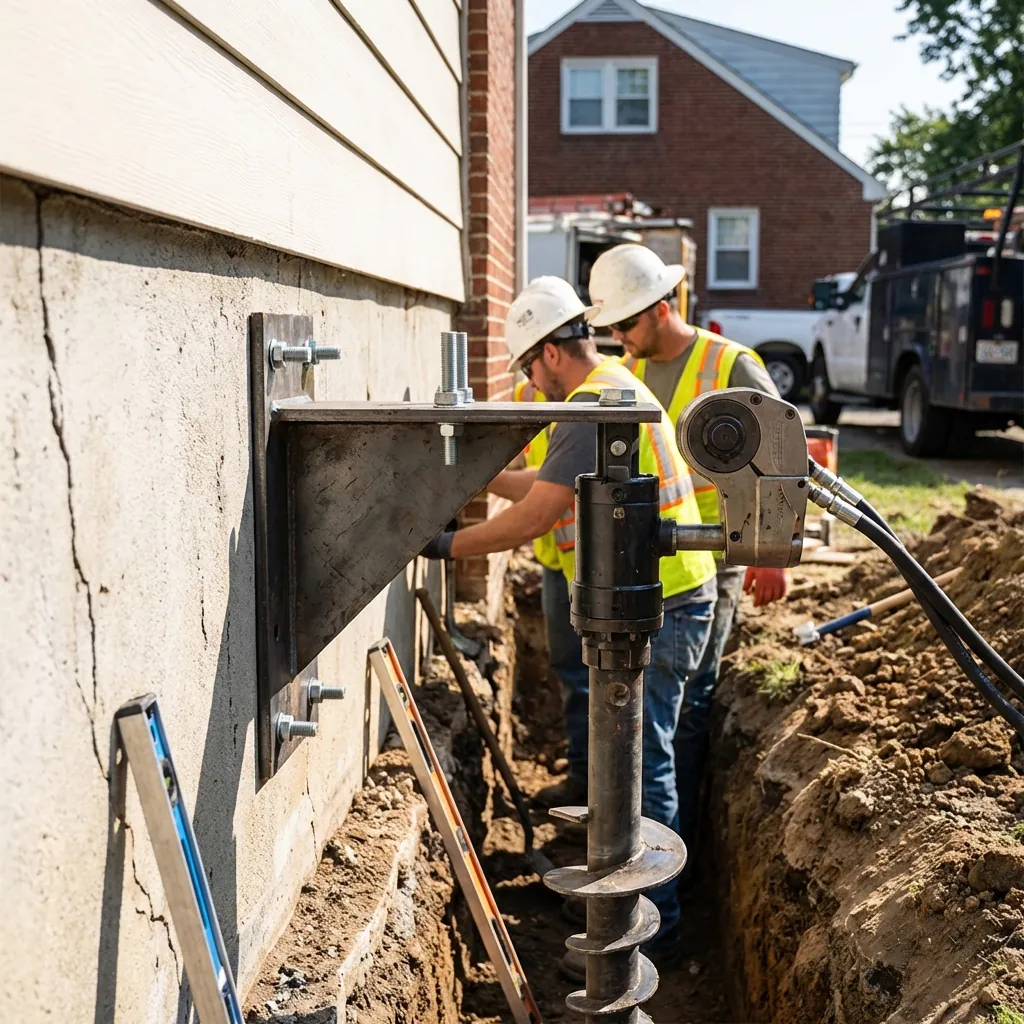
Injection only makes sense if the crack has stopped moving. If a wall is bowing inward, if stair-step cracking continues to widen, or if the footing beneath the crack is settling, sealing the crack does not address the underlying force. In those situations we evaluate whether the right repair is carbon fiber reinforcement for the wall, or helical piers and push piers to stabilize the footing.
Carbon fiber straps are engineered to resist further bowing of a basement or crawl space wall that has begun to deflect under lateral soil pressure. They are installed at calculated spacing, anchored top and bottom, and paired with the injection to restore wall integrity. Pier stabilization is a different category entirely: used when vertical settlement is the root problem and the footing needs to be supported down to stable bearing strata. The diagnostic step determines which path, or combination of paths, the wall actually requires.
Block Wall Cracks Are a Different Problem
A lot of Boise-area homes built before the mid-1990s have CMU (concrete masonry unit) block foundation walls. Cracks in block walls behave very differently than cracks in poured concrete. Water can track through the hollow cores of block, and stair-step cracking at mortar joints is often the first visible sign of lateral pressure overload.
We do not treat block wall crack repair as a simple injection job. We document crack pattern, wall plumb deviation, and any paired interior symptoms, then recommend a combined scope that typically includes wall reinforcement, weep-hole drainage, and exterior load reduction. Block walls that are just sealed on the inside almost always come back wet.
What a Real Foundation Crack Inspection Looks Like
A useful inspection is not a five-minute walk-by. We measure crack width with feeler gauges at multiple points, note orientation, check for offset, look for efflorescence or active staining, and compare interior symptoms, sticking doors, drywall cracks above openings, uneven floors, against the wall's condition. We also walk the exterior to evaluate grading, runoff concentration, and any obvious drainage overloads against the cracked wall.
Homeowners get written findings with photos, crack classification, a recommended repair method, and whether drainage correction should be part of the same scope. If the crack is still cosmetic and stable, we will tell you that too. There is no reason to sell a structural repair to a homeowner whose wall is fine.
What Drives Foundation Crack Repair Cost in Boise
Single-crack injection projects are typically the lowest-cost structural repair we do. Pricing scales with crack length, material choice, whether multiple cracks are present, and whether wall reinforcement or drainage correction needs to be included. A leaking cold-joint seal with polyurethane on an accessible wall is at the low end. A bowing block wall requiring carbon fiber, grade correction, and interior drainage is a multi-phase scope.
We quote option-based proposals so the homeowner can see what a minimum-seal path looks like next to a full long-term correction path. That is especially important for homes where more than one crack exists, because single-crack pricing quickly becomes misleading when the whole wall is telling the same story.
When to Call, and What to Expect
Call us if a crack has appeared where there was not one before, if an existing crack has widened or started leaking, or if crack symptoms are paired with any interior movement signs like door misalignment or drywall cracking above openings. Early documentation almost always keeps repair scope smaller. Waiting a season to see if it worsens is the most common reason scopes grow.
Most crack repair projects are completed in a single day once diagnosed. Where drainage correction or wall reinforcement are part of the scope, projects usually wrap in one to three days depending on access. We explain staging up front so homeowners know what interior or exterior work is required before we start.
Book a Foundation Crack Inspection With Written Findings
You will get crack classification, measured width data, a recommended repair method, and a clear answer on whether drainage correction belongs in the same scope.
Common Failure Signs in Boise
Diagonal or Stair-Step Cracks
Cracks running at an angle from corners of windows, doors, or block joints often signal active movement, not cosmetic shrinkage.
Wet or Staining Cracks
A crack that weeps, stains, or leaves efflorescence is telling you water is loading the wall: the crack is a symptom of the real pressure problem.
Widening or Offset Cracks
Cracks that have gotten wider season over season, or where one side of the crack has shifted relative to the other, indicate continued structural movement.
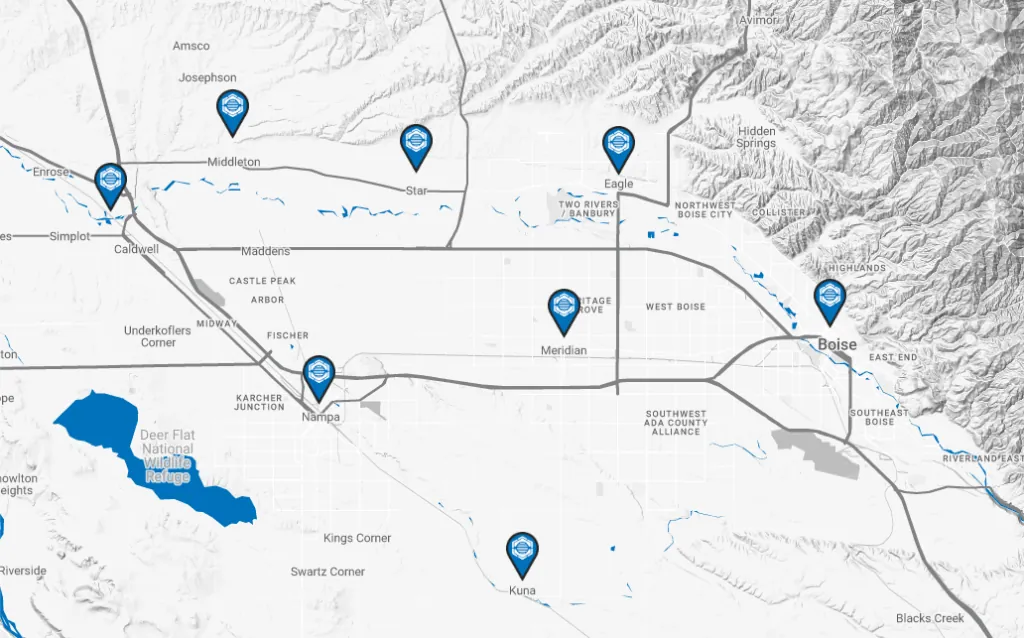
Serving All of Boise & The Valley
Our structural specialists are in Boise daily.
Boise Foundation Crack Repair FAQ
Are foundation cracks always serious?
What is the difference between epoxy and polyurethane injection?
Can I seal a foundation crack myself?
Does a leaking crack mean I need full basement waterproofing?
How long does a foundation crack repair last?
What Boise Homeowners Say
"Two other contractors quoted me epoxy on a crack that was dripping after every rain. Idaho Drainage Solutions caught that the crack was wet, used polyurethane, and fixed the downspout feeding the wall. Dry for two years now."
"They actually measured our cracks and showed us in writing which ones were structural versus cosmetic. We ended up needing carbon fiber on one wall and nothing on the others. Honest scope."
Why Choose Idaho Drainage Solutions?
Licensed & Insured
Fully licensed in Idaho (RCE-57554) with comprehensive liability coverage for your protection.
Prompt Scheduling
We respect your time. Appointments scheduled within 24-48 hours for most estimates and inspections.
Satisfaction Guaranteed
We stand behind our work with industry-leading warranties and a commitment to getting it right.
Local Expertise
We know Treasure Valley soil, water tables, and building codes better than anyone.
No-Surprise Pricing
Clear, upfront quotes with no hidden fees. The price we quote is the price you pay.
Free Consultations
Every project starts with a free on-site evaluation. No pressure, just honest advice.

0% Interest Financing Available
Flexible payment options for your drainage projects.
Related Services in Boise
PROTECT YOUR HOME
Don't let a small issue turn into a structural failure. Schedule your free estimate now.