
Project Case Study: Boise Foothills Foundation Stabilization
Case study of a Boise foothills foundation stabilization project combining structural support and drainage correction.
Case Study: Stabilizing a Moisture-Driven Settlement Pattern
This Boise foothills case study is a good example of why structural movement and drainage cannot be treated as separate topics on slope-influenced properties. The homeowner had recurring cracking, seasonal moisture, and uneven operation of doors and windows, but earlier repair attempts addressed only the visible symptoms. The underlying hydrology and support loss were still active.
Property background and why the foothills make projects different
Homes near the Boise foothills operate under a different drainage reality than flat-lot homes in many subdivision settings. Water does not simply fall and soak in. It also travels downslope, concentrates at transitions, and builds energy as it moves. On hillside-adjacent lots, one side of the home may be receiving persistent upslope runoff while another side dries much faster. Those uneven conditions create exactly the kind of support variability that leads to differential movement.
In this project, the homeowner had already spent money on patch repairs because the most obvious symptoms were interior. Cracks had been sealed. Doors had been adjusted. Minor seepage had been treated as a seasonal nuisance. None of those steps dealt with why the downhill side of the structure was moving differently, or why moisture pressure was building during snowmelt and runoff periods. By the time Idaho Drainage Solutions evaluated the property, the visible distress had become a long-running pattern rather than a single event.
That setting matters because foothill properties often need a more integrated plan. Structural stabilization alone can be compromised if upslope water keeps loading the same wall and footing zones. Drainage correction alone can reduce stress but may not recover support already lost. The right answer has to connect both disciplines.
What the homeowner was seeing before the repair
The first signs looked familiar to many homeowners: diagonal cracking above several door and window openings, doors that became harder to operate at certain times of year, and a general sense that one side of the house did not feel as stable as the other. Over time, the pattern became more specific. The downhill side showed measurable elevation variation, the lower-level wall-floor joint had repeated seasonal moisture, and runoff around the exterior suggested that water was being directed toward a sensitive support zone.
What made the case especially instructive was that the symptoms were not constant in the same way every week. They intensified during wetter periods and calmed somewhat during drier conditions. That seasonal behavior often leads homeowners to think they can postpone action. In reality, seasonal variation is often evidence that moisture-driven movement is active. It means the conditions that produce the problem are repeating.
At this property, the visual clues, the timing of the symptoms, and the lot configuration all pointed toward a combined issue: uneven support conditions with water acting as the ongoing trigger. That is the kind of pattern that rarely responds to cosmetic work alone.
What the site evaluation revealed
The inspection focused on both the structure and the site. Structural review confirmed that movement was concentrated in the same general portion of the house where runoff and moisture loading were most significant. The lot review showed that surface water from upslope areas was concentrating near a primary footing zone rather than being intercepted earlier. Seasonal seepage at the basement interface supported the same conclusion: water was not just present at the surface, it was affecting the below-grade environment too.
In foothills work, the outside pattern often explains the inside pattern. That was true here. Instead of treating the cracking, door misalignment, and seepage as three separate problems, the inspection linked them to one movement-and-moisture system. Part of the structure had lost reliable support relative to the rest, and recurring water load was continuing to stress that area. Once that mechanism became clear, the repair logic became much more disciplined.
This is also where many generic repair scopes fail. A contractor focused only on structural support might stabilize the movement zone but leave the property exposed to continued runoff pressure. A contractor focused only on drainage might reduce some wetness but fail to restore confidence in the already-distorted structure. The inspection showed why neither one by itself would be enough.
The repair strategy and why it was sequenced that way
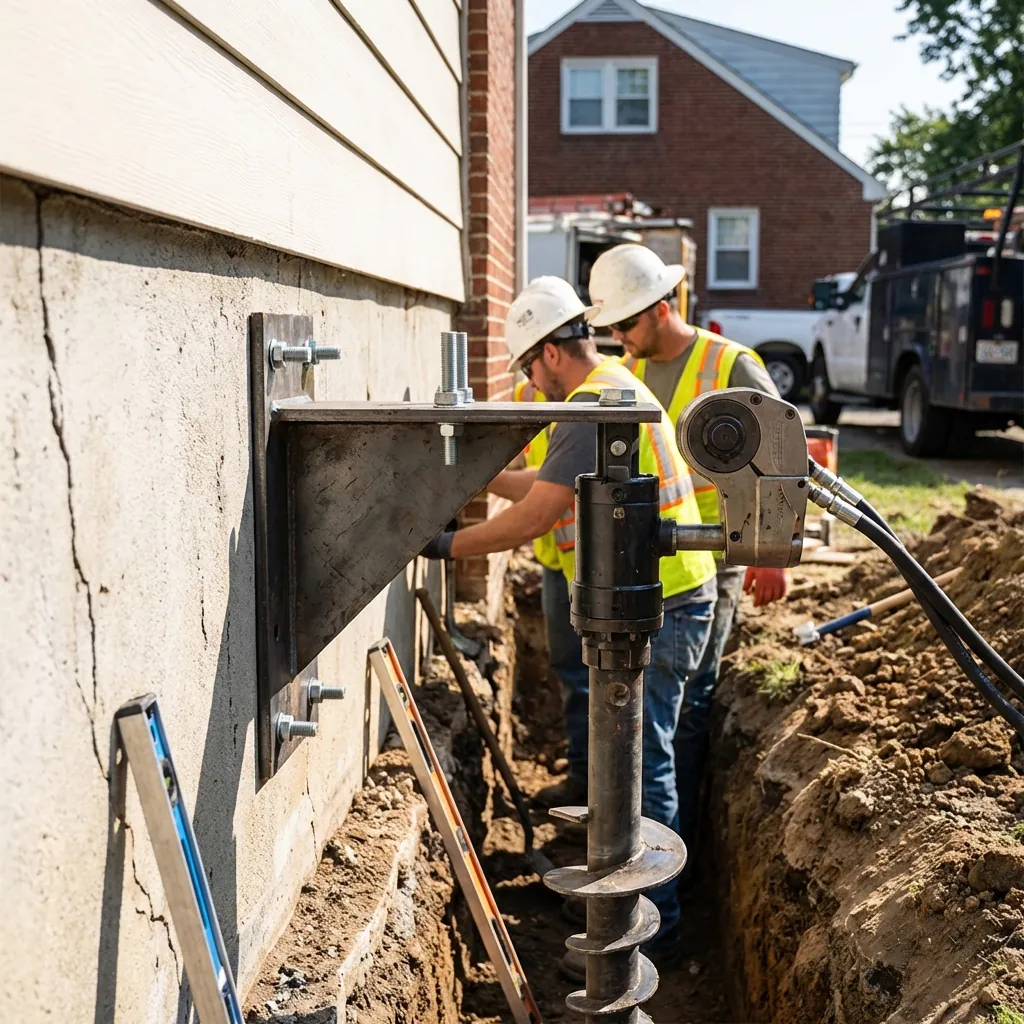
The first part of the strategy was targeted structural stabilization at the areas showing the greatest movement risk. The goal was not to overbuild the entire foundation. It was to reinforce the sections where support had proven unreliable so the structure could stop redistributing stress across vulnerable openings and floor lines. Deep-support elements were chosen because near-surface soils in the affected zone were no longer dependable on their own.
The second part of the strategy was exterior drainage correction. Upslope runoff needed to be intercepted before it reached the most sensitive footing area. Collection and conveyance were designed to capture that water and move it to a discharge path that did not simply create a new problem farther down the lot. In foothills settings, that sequence matters. If the exterior water load is ignored, the structure remains in a high-stress environment even after stabilization work is complete.
The third part addressed pressure reduction at the lower level. Because seasonal seepage had already been present, the design included a moisture-relief path tied to reliable discharge. That way the repair plan dealt not only with structural support and surface runoff, but also with the below-grade pressure conditions that had been affecting the home during snowmelt and wetter periods.
Implementation and verification
One of the most important lessons from successful stabilization work is that installation is not the end of the process. Verification matters. After the structural elements were installed and the drainage corrections were in place, Idaho Drainage Solutions used follow-up checks to confirm that the repair was performing as intended. Elevation behavior, moisture conditions, and the functionality of the drainage path were reviewed because good repair is measured by performance, not just by completion.
That verification step is especially important on complex sites. A foothills property can look improved immediately after work simply because the visible symptoms have been addressed. The more important question is whether the system behaves correctly after the next runoff cycle, after the next snowmelt period, and after the next season of moisture variation. Building a maintenance and monitoring plan into the project helps protect the investment and gives the homeowner confidence that the problem was solved at the right level.
For this home, that meant checking not only that the structure had stabilized, but that the drainage components were carrying water where they were supposed to and relieving stress from the structure-adjacent zone that had caused trouble in the first place.
Results and homeowner outcome
After the combined repair, movement progression in the active areas was stabilized and the recurring seepage at the key basement interface was eliminated. The homeowner also reported more consistent operation of doors and windows, which is one of the clearest practical signs that a structure is no longer fighting the same distortion cycle. Just as important, the property left the project with a maintenance plan rather than with a one-time repair and no long-term strategy.
That outcome matters because it illustrates what homeowners are really buying when they choose the right scope. They are not just buying piers, drains, or patching. They are buying a reduction in uncertainty. Instead of wondering each wet season whether the cracking will reopen or whether the basement will seep again, the homeowner now has a site-specific system designed for the property’s actual conditions.
For people reading a case study like this, the main takeaway is not that every foothills property needs the same repair. The takeaway is that slope, runoff, and foundation movement have to be evaluated together. That is the part of the job that prevents recurrence.
What this project teaches Boise-area homeowners
First, recurring cracking and seasonal moisture are often connected even when they appear in different parts of the house. Second, foothill and hillside-adjacent properties need drainage thinking that accounts for runoff energy and elevation change, not just simple flat-lot assumptions. Third, structural repair is most durable when it is paired with the water-management correction that reduces ongoing stress on the repaired area.
Homeowners dealing with similar symptoms should start with a full evaluation rather than isolated fixes. Related service pages such as foundation repair, helical piers, and drainage solutions can help explain the components, but the real decision comes from understanding how those components fit together on your property.
For broader background, resources from NOAA, USGS, and the USDA Web Soil Survey help explain why slope, moisture, and soil type matter so much in this region. This project is a practical example of those principles applied correctly.
How homeowners should read a project case study like this
The most useful lesson from a case study is not that another property had similar symptoms. It is understanding how the team linked symptoms to causes and then matched the repair strategy to those causes. Homeowners should ask whether their own lot has the same combination of slope, runoff concentration, support variability, and below-grade moisture stress. If the answer is yes, the case study becomes highly relevant because it shows how a combined structural-and-drainage approach can work on complex sites.
It is also useful because it shows what a complete scope looks like. Instead of isolating cracks, seepage, or runoff as separate issues, the project treated them as one system. That systems-based thinking is often the difference between a repair that lasts and a repair that simply shifts the symptoms into a new form. For foothills properties and other higher-complexity lots, that lesson alone can save homeowners from a great deal of trial-and-error spending.
What likely would have happened without the combined repair
If the homeowner had continued treating only the visible symptoms, the most likely outcome would have been repeated cosmetic cracking, renewed seasonal seepage, and a gradual increase in structural distortion on the already vulnerable side of the house. The runoff concentration would still have been stressing the same support zone, and the below-grade pressure conditions would still have been active during wet seasons and snowmelt.
That "what if" matters because it highlights the value of solving the cause instead of the symptom. The combined plan did not just stop one leak or close one crack. It interrupted the mechanism that kept recreating those symptoms. For homeowners with similar foothills conditions, that distinction is often what separates a short-term patch cycle from a true stabilization project.
That is also why this case study is useful as a planning reference. It shows how quickly a complex property can become more expensive when water management and structural support are treated as separate jobs instead of one coordinated scope.
For homeowners evaluating their own foothills property, that lesson can be just as valuable as the repair details themselves. It reinforces that the smartest investment is often the one that connects all the symptoms back to one site-specific cause pattern.
Seen that way, the project is less about one house and more about one method: diagnose the slope, the water, and the structure together, then repair them in a sequence that removes the cause instead of chasing the symptoms.
That method is what gives a complex project the best chance of staying solved.
It is also the standard homeowners should use when judging any similar repair proposal.
A repair plan that cannot explain how it interrupts the cause pattern is usually not yet complete.
That is the practical lesson this foothills project leaves behind.
It is a lesson worth applying before symptoms get worse.
Request a Similar Stabilization Assessment
If your home has recurring cracks and seasonal moisture, we can build a combined structural and drainage plan tailored to your site.
Common Failure Signs in Boise Foothills
Water Intrusion
Moisture seeping through walls, floors, or foundation during rain or irrigation season.
Structural Warning Signs
Cracks in walls, sticking doors, or uneven floors indicating foundation movement.
Ongoing Maintenance Issues
Recurring problems that never seem to go away despite multiple repair attempts.
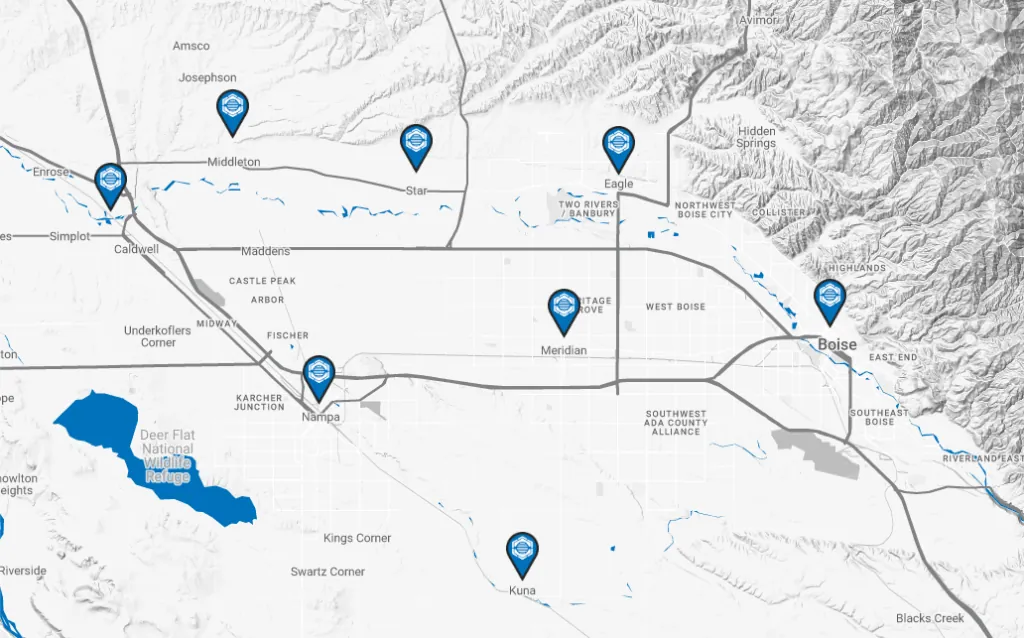
Serving All of Boise Foothills & The Valley
Our structural specialists are in Boise Foothills daily.
Boise Foothills Foothills Case Study FAQ
Was this solved with piers alone?
How long did this project take?
Can similar methods be used on non-foothill homes?
What Boise Foothills Homeowners Say
"They solved the structural and water issues together, and the recurring problems stopped."
"Very technical, very organized, and excellent communication from start to finish."
"Best contractor experience we have had for complex structural work."
Why Choose Idaho Drainage Solutions?
Licensed & Insured
Fully licensed in Idaho (RCE-57554) with comprehensive liability coverage for your protection.
Prompt Scheduling
We respect your time. Appointments scheduled within 24-48 hours for most estimates and inspections.
Satisfaction Guaranteed
We stand behind our work with industry-leading warranties and a commitment to getting it right.
Local Expertise
We know Treasure Valley soil, water tables, and building codes better than anyone.
No-Surprise Pricing
Clear, upfront quotes with no hidden fees. The price we quote is the price you pay.
Free Consultations
Every project starts with a free on-site evaluation. No pressure, just honest advice.

0% Interest Financing Available
Flexible payment options for your drainage projects.
Related Services in Boise Foothills
PROTECT YOUR HOME
Don't let a small issue turn into a structural failure. Schedule your free estimate now.