
What Is Differential Settlement?
Definition and practical explanation of differential settlement, warning signs, causes, and repair strategy for Boise and Idaho homes.
Why One Part of a Foundation Moves More Than Another
Need a property-specific answer?
We can inspect the issue on-site, document what is actually happening, and tell you whether it needs drainage work, waterproofing, structural repair, or simple monitoring.
- Treasure Valley soil and moisture context
- Photo-documented findings and next steps
- No-pressure recommendations built for your property
Differential settlement occurs when one part of a foundation moves more than another. That difference in movement is what creates distortion in the structure. Homes can tolerate a limited amount of overall movement far better than they can tolerate uneven movement, which is why differential settlement is one of the most important concepts in foundation diagnosis.
How differential settlement differs from ordinary settlement
Homeowners often assume any downward movement of a house is the same problem. It is not. Uniform settlement means the structure moves relatively evenly, which can still matter but often creates less visible distortion. Differential settlement means one side, one corner, or one section is moving on a different path than the rest. That difference creates bending, shear, and stress concentrations in framing, drywall, masonry, and slab elements.
In practical terms, this is why differential settlement tends to produce the kinds of symptoms that alarm homeowners most: diagonal cracks, sticking doors, uneven floors, and visible changes in alignment from one room to another. The house is not just moving. It is twisting or bending because its support conditions have become inconsistent.
Understanding that difference is essential because it affects repair priorities. A purely cosmetic response might make a crack less visible, but it does nothing to stop the uneven movement that caused the distortion in the first place.
Why it happens so often in Idaho homes
Differential settlement is common in Idaho because support conditions vary so much from lot to lot and even within a single lot. One footing may rest on stronger native soil while another sits on fill that compresses more over time. One side of the home may stay wetter because of downspouts, irrigation, or poor grade. Another side may dry and shrink more dramatically. When those support conditions diverge, the structure begins responding unevenly.
Moisture is a major amplifier of the problem. Localized wetting can soften or weaken one bearing zone while another remains comparatively stable. Clay-sensitive areas may swell and shrink with seasonal moisture change. Concentrated runoff can erode fines from one section of support but not another. In all of those cases, the common issue is not just movement. It is unequal movement.
This is why differential settlement is best understood as a structure-plus-site issue. The home may show the symptoms, but the lot conditions often explain why the symptoms developed where they did.
What homeowners usually notice first
The earliest signs are often small but patterned. A homeowner may see diagonal cracks at door corners, a stair-step crack in masonry, or a floor transition that suddenly feels more noticeable. Doors and windows may become harder to operate in the same portion of the home. Cosmetic repairs may hold briefly and then reopen. These are all classic signs that one part of the structure is moving differently than another.
In many cases, the outdoor clues are present too. One side of the house may have persistently wet soil, negative grade, or a history of ponding. Another may have visible settlement of flatwork, erosion near a footing edge, or long-term roof runoff concentration. Differential settlement often announces itself outside before the full interior pattern becomes obvious.
That is why homeowners should resist the urge to interpret a crack without context. The crack matters, but the distribution of multiple symptoms across the house matters more.
Why unequal movement can escalate quickly
Once one part of the structure begins moving differently, the building has to redistribute load. That redistribution may increase stress on openings, wall intersections, slab sections, and finish materials. If the cause remains active, such as ongoing runoff concentration or moisture cycling, the structure continues adapting to unstable support instead of returning to a stable condition. That is why seemingly modest differential movement can become more expensive over time.
Differential settlement also tends to be self-reinforcing if water is involved. A shifted slab or cracked foundation may create new pathways for moisture. A compromised grade may worsen as soil erodes. A homeowner may keep patching the visible effects while the support conditions underneath remain unchanged. The earlier the pattern is identified, the more controlled the repair discussion usually becomes.
This does not mean every house with a crack needs major structural work. It means that uneven movement deserves a disciplined evaluation before homeowners assume it is harmless or purely cosmetic.
How differential settlement is actually confirmed
Good diagnosis combines symptom pattern, elevation behavior, and site review. Crack direction and location help identify where strain is concentrating. Floor measurements and wall behavior help confirm whether the movement is localized or distributed. Exterior review helps determine whether water, soil variability, erosion, or other site conditions are contributing. A one-photo diagnosis is rarely enough.
This is also where related topics become important. Pages like settlement causes in Idaho, foundation repair services, and drainage solutions all connect because differential settlement rarely exists without a mechanism. The inspection must determine whether the primary driver is weak soil, active moisture, lost support, or some combination of those conditions.
The goal is not just to put a label on the problem. The goal is to understand which section of the structure is unstable and why it became unstable in the first place.
What the correction path usually looks like
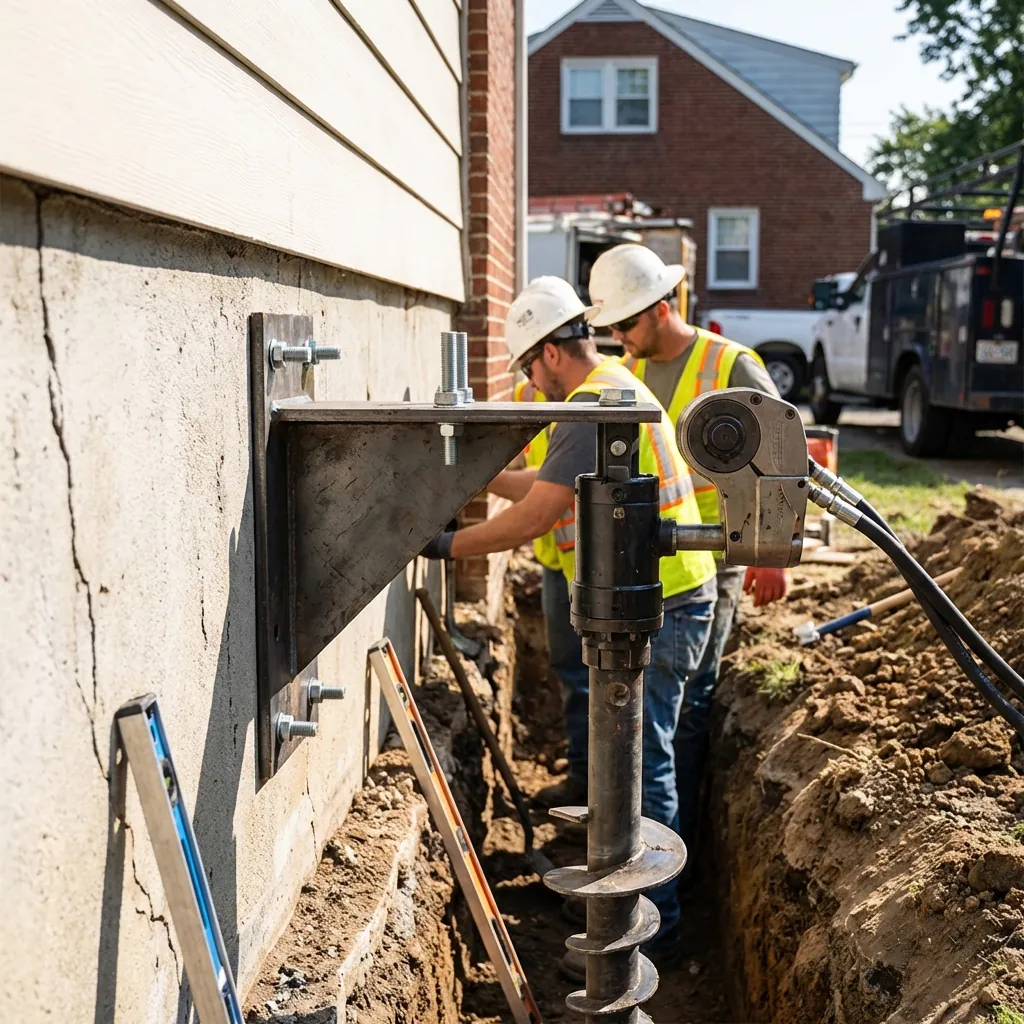
Repair typically has two parts. First, the structure may need stabilization in the zones where support is no longer reliable. That can involve targeted support systems such as piers or other structural corrections depending on the type of foundation and the severity of movement. Second, the conditions that caused the uneven support need to be addressed. If moisture concentration, poor grading, runoff, or soil cycling remain active, the repaired zone is still being stressed.
That is why integrated planning matters so much. Structural support stops the structure from following weak soil farther out of alignment. Drainage planning reduces the chance that the support conditions will keep changing after the repair. Monitoring after completion helps confirm that the movement has truly stabilized and that water controls are performing the way they should.
When these steps are handled together, differential settlement becomes much more manageable. When they are separated, recurrence becomes more likely.
What Boise homeowners should keep in mind
Differential settlement is serious because of the unevenness, not just because of the movement itself. The same amount of total movement spread evenly across a structure can behave very differently than movement concentrated at one corner or one side. That is why homeowners should pay attention to patterns, timing, and site conditions instead of trying to judge one crack in isolation.
Reference sources like the USDA Web Soil Survey and USGS water resources can help explain the regional context, but the most useful answer still comes from understanding what your structure and your lot are doing together. When homeowners make that shift, they move from symptom repair to root-cause repair.
Schedule Differential Settlement Evaluation
We’ll identify movement distribution and provide a repair strategy based on structure and soil behavior.
Common Failure Signs in Boise
Water Intrusion
Moisture seeping through walls, floors, or foundation during rain or irrigation season.
Structural Warning Signs
Cracks in walls, sticking doors, or uneven floors indicating foundation movement.
Ongoing Maintenance Issues
Recurring problems that never seem to go away despite multiple repair attempts.
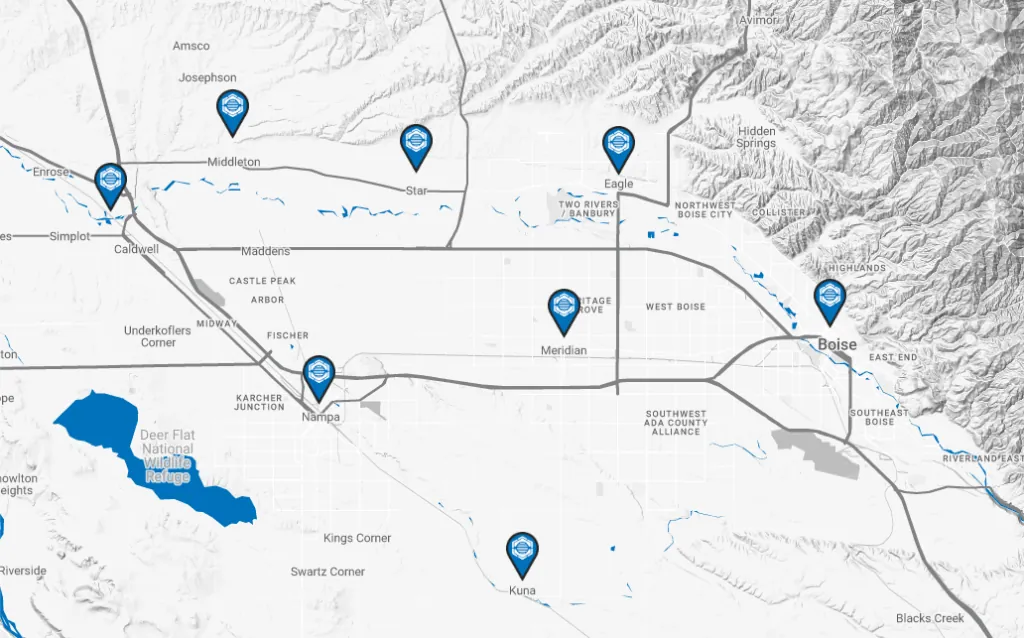
Serving All of Boise & The Valley
Our structural specialists are in Boise daily.
Boise Differential Settlement FAQ
Is differential settlement serious?
Can cosmetic repairs solve differential settlement?
How is differential settlement confirmed?
What Boise Homeowners Say
"They clearly explained differential settlement and what needed to be fixed first."
"Great analysis and practical stabilization plan."
"Professional structural guidance and transparent recommendations."
Why Homeowners Use Idaho Drainage Solutions
Licensed & Insured
Fully licensed in Idaho (RCE-57554) with comprehensive liability coverage for your protection.
Prompt Scheduling
We respect your time. Appointments scheduled within 24-48 hours for most estimates and inspections.
Satisfaction Guaranteed
We stand behind our work with industry-leading warranties and a commitment to getting it right.
Local Expertise
We know Treasure Valley soil, water tables, and building codes better than anyone.
No-Surprise Pricing
Clear, upfront quotes with no hidden fees. The price we quote is the price you pay.
Free Consultations
Every project starts with a free on-site evaluation. No pressure, just honest advice.

0% Interest Financing Available
Flexible payment options for your drainage projects.
Related Next Steps in Boise
Need help applying this to your property?
If this differential settlement sounds familiar at your home, we can inspect the property and give you a clear scope.