

What Is Frost Heave and Why Does It Matter?
Learn what frost heave is, how it affects Idaho foundations and slabs, and how drainage and design reduce freeze-thaw movement risk.
How Freeze-Thaw Cycles Move Soil and Structures
Need a property-specific answer?
We can inspect the issue on-site, document what is actually happening, and tell you whether it needs drainage work, waterproofing, structural repair, or simple monitoring.
- Treasure Valley soil and moisture context
- Photo-documented findings and next steps
- No-pressure recommendations built for your property
Frost heave is upward ground movement caused by freezing conditions in moisture-bearing soil. As water in the soil freezes and forms ice lenses, the ground can lift and place stress on slabs, sidewalks, retaining features, and in some cases portions of a structure. When thaw comes, the ground does not always return to its original condition in a perfectly even way.
What frost heave actually is
Homeowners sometimes think of frost heave as the ground simply freezing and getting bigger. The more useful explanation is that frost heave depends on three things working together: cold temperatures, frost-susceptible soil, and available moisture. If moisture is present in the freezing zone, ice lenses can form and draw more water upward through the soil profile. That is what creates the lifting force.
Once the ground lifts, anything resting on or attached to that zone has to respond. Sometimes the effect is obvious in exterior flatwork. Sometimes it appears as edge movement in slabs, separation at steps or landings, or short-term alignment changes in doors and frames. When thaw occurs, the soil can soften, settle unevenly, or remain weaker in the affected area than it was before the freeze event.
That is why frost heave is both a winter problem and a thaw problem. The damage mechanism begins with freezing, but the support irregularity and moisture loading often continue into the spring transition.
Why it matters in Idaho
Idaho homes experience repeated freeze-thaw cycles rather than one long, stable winter condition. That pattern matters because the ground may freeze, partially thaw, refreeze, and remain saturated near structure edges. In Boise and surrounding areas, winter conditions also interact with snowmelt, runoff, and localized drainage issues. If water is already collecting near a slab edge, walkway, retaining wall, or shallow footing, the freeze zone in that area becomes much more vulnerable.
Not every Boise property will experience major frost-heave damage, but properties with chronic wet spots, poor drainage, heavy shadowing, or recurring winter runoff are more likely to show symptoms. Homes at higher elevations or with more pronounced microclimate variation may see stronger effects, but even lower-elevation Treasure Valley lots can experience frost-related movement where water is not being controlled well.
This is another reason drainage work matters year-round. A property that holds water in winter is not just muddy. It is creating conditions where freeze-thaw movement can affect the support and durability of the built environment.
How frost heave shows up around homes
Exterior flatwork is often the first place homeowners notice it. Sidewalks, patios, stoops, and driveway edges can rise unevenly, separate, or crack after winter. Retaining edges and small walls may shift slightly. In some homes, the symptoms are subtler, such as recurring slab-edge distress, short-term sticking of doors near entry areas, or changes in how water drains off hardscape during spring thaw.
Where the issue becomes more serious is when frost heave overlaps with already weak support conditions. If a slab edge is frequently saturated and then repeatedly frozen, the support there becomes more variable over time. If an exterior runoff problem keeps one side of a structure wetter than another, frost-related lifting and post-thaw softening may amplify an existing movement pattern. In that sense, frost heave often works as a force multiplier rather than an isolated one-time event.
Homeowners should also understand that winter symptoms can be misleading if they are viewed alone. A door that sticks only during cold months may be dismissed as seasonal swelling, but if the same area also shows exterior moisture problems or slab-edge cracking, frost-related support change may deserve more attention.
How frost heave differs from expansive clay and ordinary settlement
Frost heave and expansive clay can both cause movement, but they are driven by different mechanisms. Expansive clay changes volume with wetting and drying. Frost heave depends on freezing and ice formation in the presence of moisture. Settlement, by contrast, usually refers to a loss or change of support that allows the structure to move downward or unevenly. In practice, however, those mechanisms can overlap on a real property.
A Boise home with clay-sensitive soil, poor winter drainage, and freeze-thaw exposure may show symptoms that involve all three concepts: swelling or shrinkage, frost-related lifting, and post-thaw support variability that contributes to settlement patterns. That is why movement diagnosis should focus on conditions and timing, not just labels. The right repair depends on which mechanism is active and how strongly it is affecting the structure.
Understanding the difference is helpful because it keeps homeowners from choosing oversimplified solutions. If the issue is frost-related moisture at the edge of a slab, the answer may center on drainage and surface correction rather than a generic crack repair.
How risk is reduced on Idaho properties
The most effective way to reduce frost-heave risk is to reduce moisture in the critical freeze zone. That means keeping drainage away from slab edges and shallow foundation areas, correcting low spots that trap winter runoff, rerouting downspouts, and avoiding conditions where water sits beside hardscape or structure edges before a freeze. Good winter drainage is therefore one of the best frost-related risk controls available to homeowners.
That is why pages like drainage solutions and expansive clay behavior are still relevant even when the visible issue appears to be winter-specific. Frost heave is strongly influenced by the moisture environment the property carries into the freeze period. If that environment is improved, the severity of frost-driven movement usually decreases.
Where structural symptoms are already present, a foundation inspection helps determine whether the winter movement is a temporary surface issue, part of a larger structural pattern, or evidence that long-term moisture control has been inadequate.
What homeowners should watch year to year
Seasonal records are extremely useful. Note whether certain areas collect water before winter, whether hardscape movement appears after cold spells, and whether spring thaw brings back the same wet spots or slab-edge issues. Pay attention to whether doors, floors, or cracks behave differently during freeze-thaw periods than they do during summer. Those observations help distinguish one unusual winter from an ongoing pattern tied to the site.
For broader climate and hydrology context, homeowners can review NOAA climate information and USGS water resources, but the most useful next step is still a property-specific review if the same winter symptoms keep returning. Frost heave is manageable when the site conditions causing it are identified early and corrected with the right drainage logic.
Evaluate Freeze-Thaw Movement Risk
We’ll determine whether frost-related moisture and soil movement are contributing to your structural symptoms.
Common Failure Signs in Idaho
Water Intrusion
Moisture seeping through walls, floors, or foundation during rain or irrigation season.
Structural Warning Signs
Cracks in walls, sticking doors, or uneven floors indicating foundation movement.
Ongoing Maintenance Issues
Recurring problems that never seem to go away despite multiple repair attempts.
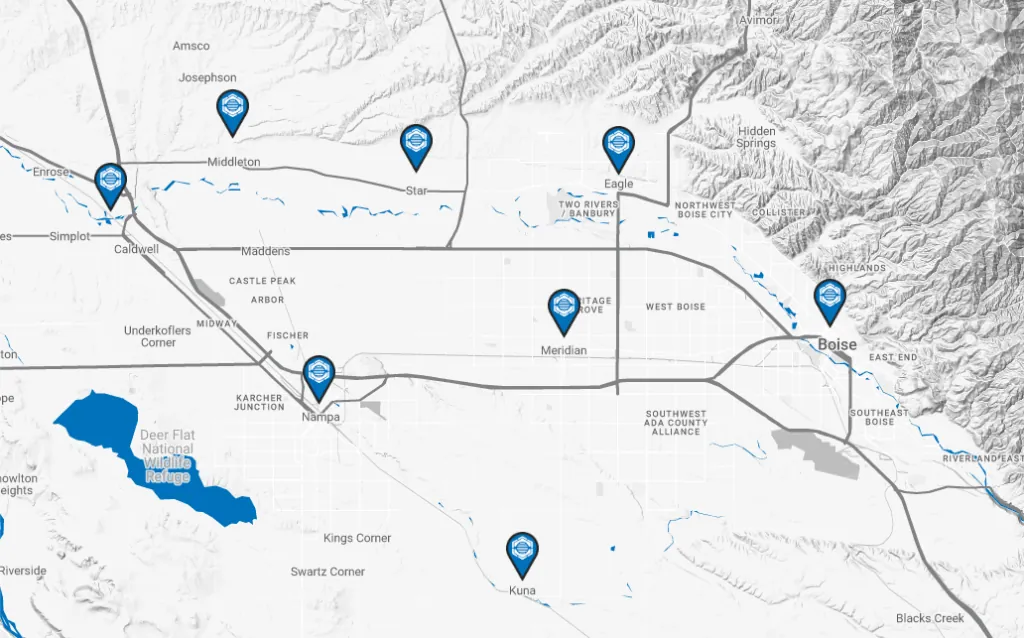
Serving All of Idaho & The Valley
Our structural specialists are in Idaho daily.
Idaho Frost Heave FAQ
Is frost heave only a northern-climate problem?
Can better drainage reduce frost heave effects?
Does frost heave mean my foundation is failing?
What Idaho Homeowners Say
"They connected our winter movement issues to drainage and soil conditions clearly."
"Professional assessment and practical mitigation plan."
"Great technical explanation without overcomplicating it."
Why Homeowners Use Idaho Drainage Solutions
Licensed & Insured
Fully licensed in Idaho (RCE-57554) with comprehensive liability coverage for your protection.
Prompt Scheduling
We respect your time. Appointments scheduled within 24-48 hours for most estimates and inspections.
Satisfaction Guaranteed
We stand behind our work with industry-leading warranties and a commitment to getting it right.
Local Expertise
We know Treasure Valley soil, water tables, and building codes better than anyone.
No-Surprise Pricing
Clear, upfront quotes with no hidden fees. The price we quote is the price you pay.
Free Consultations
Every project starts with a free on-site evaluation. No pressure, just honest advice.

0% Interest Financing Available
Flexible payment options for your drainage projects.
Related Next Steps in Idaho
Need help applying this to your property?
If this frost heave sounds familiar at your home, we can inspect the property and give you a clear scope.